Births of the mammals extremely rare in captivity, say keepers, with ‘Womble’ only the second calf born at Chester
Sundus AbdiWed 20 May 2026 13.39 EDTLast modified on Wed 20 May 2026 14.05 EDTSharePrefer the Guardian on GoogleInside a heated incubator at Chester zoo, a wrinkled newborn aardvark nicknamed “Womble” spent its first weeks being bottle-fed milk through the night by keepers determined to keep the rare calf healthy.
Sophie Tyson said feeding Womble ‘was really exciting, and really tiring’. Photograph: Joel Goodman/The GuardianNamed after the creatures in Elisabeth Beresford’s children’s books and the subsequent animated TV series, the nocturnal animal is only the second aardvark born at the zoo in its 94-year history. Keepers say births of the species are extremely rare in captivity, with the last aardvark calf born in the zoo in 2022.
For several weeks, the keeper Sophie Tyson fed Womble warm milk every few hours while its mother, Oni, left the den to forage for food. The nursling was placed in an incubator before being carefully returned to its mother each morning.
Zookeepers say the calf was healthy at birth, but 13-year-old Oni was not producing enough milk to fully feed it, prompting staff to step in with round-the-clock care.
Tyson said the team first suspected that Oni was pregnant after noticing her weight changes, with an ultrasound confirming she was further along than expected. “I came into work one morning and was lucky enough to find a little calf,” she said.
The first weeks were intense, Tyson said, with feeds required every two hours around the clock. “It was really exciting, and really tiring,” she said. “You’d get an hour’s sleep in between feeds, and then you were back up again feeding.”
Though Tyson had worked with aardvarks over the last three and a half years, it was her first time caring for a calf. “It was a big learning curve, but a great opportunity to learn about them,” she said.
The sex of the calf is still unknown, as the genitalia of young aardvarks are difficult to distinguish so soon after birth.
The species is rarely seen in captivity, and, according to Chester zoo, there are only 68 aardvarks in European zoos and 114 worldwide, with Womble believed to be the only calf born in the UK since 2024.
Womble, now seven weeks old, weighs about 7kg. Photograph: Joel Goodman/The GuardianAardvarks are nocturnal mammals native to sub-Saharan Africa, spending most of the day underground and emerging at night in search of food. They use their claws, long snout and sticky tongue – which can measure up to 25cm – to dig into soil to feed on ants and termites. Their name means “earth pig” in Afrikaans. Despite a similar appearance to anteaters and armadillos, they are not closely related.
Tyson said Womble was now thriving and weighed about 7kg, having weighed 1.4kg at birth. The calf was becoming increasingly curious and active, she said, “following its mother, bumbling around and exploring the outside world.”
She said aardvarks remained challenging animals to breed in captivity and the parents had been housed together for a long time but never bred. In 2022, the first calf was a surprise to keepers – but this time, it was no shock as the couple had become “more romantic”.
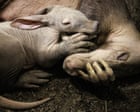
Womble and Oni are now living together full-time. Photograph: Joel Goodman/The GuardianConservationists say aardvarks face increasing threats in the wild due to habitat loss linked to agricultural expansion, as well as being hunted for their meat in some regions.
“Womble has gone from strength to strength and is doing brilliantly, so now lives full-time with mum Oni, and it’s wonderful to see them snuggled up side by side together,” said Tyson.
Explore more on these topicsShareReuse this content‘A life among the trees’: Bristol zoo’s gorillas move out of town
30 Mar 2026India’s supreme court orders inquiry into giant zoo run by son of Asia’s richest person
26 Aug 2025Four rare Barbary lion cubs born at Czech zoo
6 Aug 2025Danish zoo asks pet owners to donate rabbits and horses to feed its predators
4 Aug 2025‘My daughter just loves you’: stars of One Zoo Three have high hopes for Hertfordshire
20 Apr 2025Zebra killed in ‘incident’ with rhino at Colchester zoo
11 Jan 2025Edinburgh zoo’s pygmy hippo Haggis could be internet rival to Moo Deng
4 Nov 2024Dogs and drones sent to find raccoons after Isle of Wight zoo escape
1 Nov 2024Cotswold wildlife park successfully breeds endangered Madagascan lemur
20 Oct 2024Brown bear in Kent recovering well after UK-first brain surgery
10 Oct 2024