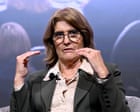
The Reserve Bank governor said AI could be a bubble and there was no evidence it is making the economy more efficient, as the Albanese government claims the technology will solve Australia’s economic malaise.
Ahead of an expected interest rate rise next week Michele Bullock also said the slump in house prices was deeper than others in Australia’s recent history.
Resurgent oil prices and inflation are weighing on markets but US tech stocks surged on Monday after Facebook owner Meta debuted its new Muse AI agent and saw its shares rise 11%.
Bullock said a messy slump in tech values could hurt economic activity, speaking at a CEDA event in Sydney.
Sign up for the Breaking News Australia email“All central banks are a little bit worried about that,” Bullock said.
“Some people think it’s a bubble, some people don’t. I don’t have a particular view one way or the other, but it’s a risk that I think we’re watching.”
Bullock said the RBA and its overseas colleagues believed AI was “the great white hope” to make economies more productive but had seen little sign of any effect yet, with rapid adoption and investment in datacentres adding to inflation instead.
She cited research from the RBA’s South Korean counterpart that found employees adopting AI tended to produce the same output but work 1.5 hours less each week.
“[While] people fiddle around and try and figure out what to do with this new technology, productivity actually can decline,” Bullock said. “But once we reimagine our business processes… then you might see productivity take off.”
The Australian government’s intergenerational report, released on Tuesday, relied on the potential “profound” boost from AI in its projection that Australians’ inflation-adjusted per-person economic activity would rise from $99,200 today to $157,300 by 2066.
The treasurer, Jim Chalmers, told the Guardian’s Australian Politics podcast: “It’s the most transformative thing that will happen in our lifetime.”
The report assumed productivity would return to its long run level of improving by 1.2% a year, which economists have said appears unlikely. If productivity only rose by 0.8%, per-person activity would only hit $136,600 by 2066.
Bullock said on Tuesday: “Many have put it, ‘well, it’s an unrealistic assumption, we’re not going to get that.’ I guess the way I’m trying to think about it is, ‘OK, that’s what we’ve got to aim at.”
Housing downturn
As the government defends Australia’s easing rate of immigration, Bullock said immigration was almost entirely responsible for Australia’s economic growth in the last year.
skip past newsletter promotionFree newsletter |When neededSign up to Breaking News Australia
Get the most important news as it breaks
after newsletter promotion
Bullock said new arrivals did not add to inflation as they typically worked as well as spending money. She said the exception was the housing market, as new immigrants did not immediately generate new housing supply.
“Where it bites is the housing market, because the housing market can’t respond,” she said.
One Nation has called for more migrants to leave Australia than arrive over three years, including reducing the number of temporary migrants by more than 750,000.
Labor has instead planned to tighten the existing immigration intake, which home affairs minister Tony Burke said would be “part of the solution for the housing crisis” – but Burke warned more severe cuts could “trash the economy”.
House prices have fallen 3.1% over the past three months after the RBA lifted interest rates three times and the government reformed property investor tax breaks. Bullock said home loan approvals had slumped, in her most explicit public comments on the budget to date.
“They’ve dropped for everyone but they’ve really dropped a long way for investors, so it has changed the dynamic for investors, whether it’s worth investing in housing or not,” she said.
Bullock said housing had become “pretty unaffordable” before the decline, which she described as “a slight dip down after a very long run up”.
“The downturn is sort of in the lower range … but it’s certainly not out of the ballpark of the sorts of downturns we’ve seen in the past,” she said.
She declined to say whether she would recommend an interest rate increase next Tuesday. Traders are betting on more than a 90% chance rates will rise from 4.35% to 4.6%, which would be a 14-year high.