Jack Clark describes ‘vertiginous sense of progress’ and ‘profound changes’ to society alongside risks of technology
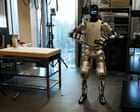
Robert Booth UK technology editorThu 21 May 2026 00.01 EDTSharePrefer the Guardian on GoogleAn AI system will work with humans to make a Nobel prize-winning discovery within 12 months and tradespeople will be helped by bipedal robots in two years, according to the co-founder of Anthropic.
Jack Clark described a “vertiginous sense of progress” in the technology and made a series of predictions, including that companies run solely by AIs would be generating millions of dollars in revenue within 18 months, and that by the end of 2028, AI systems would be able to design their own successors.
‘Too powerful for the public’: Inside Anthropic’s bid to win the AI publicity warRead moreIn a lecture at Oxford University on Wednesday, he also said there remained plausible scenarios in which the technology had “a non-zero chance of killing everyone on the planet” and that it was “important to clearly state that that risk hasn’t gone away”. Anthropic’s most popular model is called Claude, but it recently launched a version called Mythos that proved alarmingly capable at exploiting cybersecurity weaknesses.
Clark told students it would be better if humans could slow the development of the technology “to give ourselves more time as a species” to deal with the implications of its powers. But he said this wouldn’t happen, in the breakneck development “by a variety of actors and a variety of countries, locked in a competition with one another, where commercial and geopolitical rivalries are often drowning out the larger existential-to-the-species aspects of the technology being built”. This was “not ideal”, he said.
Jack Clark said he wanted to encourage humanity to prepare for a technology that would ‘soon be more capable than all of us collectively’. Photograph: Samuel Corum/Bloomberg/Getty ImagesClark is one of the most senior figures at Anthropic, which was established by AI researchers who quit the rival firm OpenAI over disagreements on safety. The $900bn (£670bn) company has been accused by Donald Trump’s White House and other AI accelerationists of “fear-mongering” to encourage regulation that could cement its competitive position.
Anthropic disputes this, and Clark said many people appeared to be in denial about AI’s progress. He said he wanted to encourage humanity to prepare for a technology that would “soon be more capable than all of us collectively”. Comparing the failure to prepare for AI to the failure to prepare for pandemics such as Covid, he said: “If we stand by and let synthetic intelligence multiply, then we’ll eventually be forced into reactivity.”
Critics of the frontier AI companies such as Anthropic, OpenAI and Google fear over-reliance on their few AI models – which have been backed by huge amounts of profit-seeking capital – could create a “single point of failure” in global systems.
Prof Edward Harcourt, the director of the Institute for Ethics in AI, which co-hosted Clark’s lecture, separately warned that the rise of AIs that did more and more things for humans risked creating “cognitive atrophy” which could weaken humans’ decision-making and powers of judgment. He advocated for alternative AI models that ask humans to do more of the thinking, sometimes called “Socratic” AI.
Clark said his most conservative prediction was that “vast swathes of the economy and society will go through profound changes” – which could include a machine economy decoupling from the human economy, robots gaining brains, science progressing without humans, and scientific equipment that people hadn’t conceived of but which worked. He admitted some of this sounded “crazy”.
Explore more on these topicsShareReuse this contentGoogle DeepMind in talks with UK unions amid staff concern over US and Israel’s AI use
14h agoAI engineer says Google unfairly sacked him after he protested against work for Israel
22h agoOne in seven in UK prefer consulting AI chatbots to seeing doctor, study finds
13 May 2026Chinese court awards compensation to sacked worker replaced by AI
13 May 2026Film industry cannot fight rise of artificial intelligence, says Demi Moore
12 May 2026Google announces raft of free upgrades for Android phones
12 May 2026AI-powered hacking has exploded into industrial-scale threat, Google says
11 May 2026Molière Ex Machina: AI used to create ‘new work’ by beloved French playwright
11 May 2026Richard Dawkins concludes AI is conscious, even if it doesn’t know it
5 May 2026AI outperforms doctors in Harvard trial of emergency triage diagnoses
30 Apr 2026
