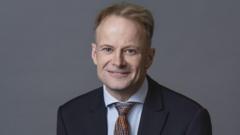
Pioneering Australian doctor Richard Scolyer has died, three years after being diagnosed with an aggressive brain tumour.
Scolyer, 59, made global headlines for his decision to undergo a risky world-first experimental treatment for his glioblastoma at the hands of his friend Professor Georgina Long - based on the pair's own scientific breakthroughs in skin cancer.
Their work on advanced melanoma - once a death sentence - has saved countless lives, and their encouraging findings in treating Scolyer's brain tumour have triggered an early stage clinical trial in the US.
"I wanted to keep contributing, even in my darkest hour," Scolyer said in an open letter announcing his passing.
"I pen this letter as a final goodbye to all those I have had the immense privilege of loving, sharing life's adventures with, working alongside and meeting during what can only be described as a life filled with happiness, optimism, opportunity and passion."
One of the country's most respected medical minds, Prof Scolyer became a national treasure. In 2024, he was named Australian of the Year alongside Long.
As co-directors of the Melanoma Institute Australia, over the past decade the pair's research on immunotherapy, which uses the body's immune system to attack cancer cells, has dramatically improved outcomes for advanced melanoma patients globally. Half are now essentially cured, up from less than 10%.
Scolyer also pointed to the mentoring of up-and-coming pathologists as a source of pride in his career.
"I have always been driven by the belief that we all have a responsibility to try to change the future for others and leave the world a better place... I have lived that ethos to the fullest."
Becoming a 'guinea pig'
Speaking to the BBC in 2024, Scolyer said he refused to take his shock diagnosis lying down.
Glioblastomas, found in the brain's connective tissue, are notoriously aggressive and the general protocol for treating them - immediate excision then radiotherapy and chemotherapy - has changed little in two decades. Most patients with Scolyer's form of tumour survive less than a year.
"It didn't sit right with me… to just accept certain death without trying something," Prof Scolyer said.
"It's an incurable cancer? Well bugger that!"
Long was similarly determined. She spent the hours after she was told of her friend's diagnosis grieving, then plotting.
Cancer doctor takes gamble to treat his brain tumour
In melanoma, her team discovered that immunotherapy works better when a combination of drugs is used, and when they are administered before any surgery to remove a tumour. And so, Prof Scolyer in 2023 became the first brain cancer patient to ever have combination, pre-surgery immunotherapy.
He was also given a vaccine personalised to his tumour's characteristics, which boosts the cancer-detecting powers of the drugs.
Scolyer and Long knew the odds of a cure were "minuscule", but hoped the experimental treatment would prolong Prof Scolyer's life.
Subsequent scans appeared to show a positive immune response in the brain - and a a small clinical trial is now trying to replicate those results.
"This was science in action!" esteemed melanoma surgeon John Thompson AO said in a statement paying tribute to his friend.
Describing Scolyer as a "cheery, down-to-earth, lad from Launceston" and a brilliant, internationally recognised scientist, he said: "He will be remembered as a truly great Australian."
SuppliedScolyer is survived by his wife, fellow pathologist Katie Nicholl, and his three children.
In his letter, he said he was "perhaps lucky" that the physical and cognitive impacts of his brain cancer meant he was unlikely to have been fully aware of his own decline over these final weeks.
"I write this knowing that my wonderful family would have been by my side every minute, as they have been throughout my cancer journey… They are shining examples of the best of humanity and make me extremely proud."
Scolyer - who documented his treatment online - also thanked Australians for the outpouring of love.
"You've laughed with me, cried with me, and provided encouragement and support to keep going just when I needed it most. I haven't sugar coated my journey and I sincerely thank you for allowing me the space and opportunity to share it with you, warts and all."
He issued a call for scientists to keep being brave and inquisitive, and for governments to fund their innovations.
"We can and should continue to push boundaries to propel the cancer field forward."
AustraliaBrain cancerRelatedFather and daughter battle storms and health scare as they sail around the world
Man dies after shark attack in Western Australia, police say
Why are devastating mice plagues happening in Australia?
More from the BBC5 days agoI've donated part of my brain to help find a cure for dementia
5 days ago5 days agoTravelling as a biking, piping Viking in son's memory
Terry Forster founded the motorbike-riding, pipe and drum-playing group after his son passed away.
5 days ago28 May 2026My daughter woke up with a numb arm and died two weeks later
A mum whose daughter died weeks after a brain tumour diagnosis says her death must not be "in vain".
28 May 202626 May 2026Teen taking GCSEs after brain tumour treatment
Alex from Shrewsbury missed a year of school to undergo cancer treatment.
26 May 202624 May 2026How boy who lost life to rare cancer is helping other children
Charlie Robinson died aged five of a brain tumour but now his legacy is helping others.
24 May 2026