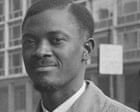
A 93-year-old Belgian former diplomat who in March year became the first person to be charged in the murder of Congolese leader Patrice Lumumba has died before he could stand trial.
The death of Étienne Davignon, an aristocrat who served as a European commissioner during a decades-long career as one of Belgium’s leading diplomats and industrialists, was confirmed by the Jacques Delors Institute thinktank, where he had served on the board.
In March, Davignon was ordered to stand trial for war crimes for alleged involvement in the extra-judicial killing of Lumumba 65 years ago, a final attempt to shed light on one of the 20th century’s most consequential political assassinations.
Étienne Davignon was ordered to stand trial for war crimes for alleged involvement in the assassination of Lumumba 65 years ago. Photograph: Eric Vidal/ReutersLumumba, who was elected the first prime minister of the country now called the Democratic Republic of Congo upon its independence from Belgium in 1960, was ousted from power months later and killed by Belgian-backed secessionist rebels on 16 January 1961.
The murder was a dark chapter in Belgium’s colonial history and a watershed for the era’s liberation struggles in African countries.
Prosecutors said Davignon, a junior diplomat at the time, had participated in the unlawful detention or transfer of Lumumba and deprived him of his right to an impartial trial.
Davignon was also accused of involvement in the murders of two of Lumumba’s political allies, Maurice Mpolo and Joseph Okito. He had denied any wrongdoing and at the time of his death was awaiting the outcome of an appeal against the Belgian court’s decision to order him to stand trial.
At the time the court’s decision was welcomed by the Lumumba family, who said: “For our family, this is not the end of a long fight, it is the beginning of a reckoning that history has long demanded.”
‘It’s going to give us closure’: could there finally be justice for the murder of Patrice Lumumba?Read moreHe was the last person still alive to be targeted by the Belgian investigation. The court ruled that cases against other suspects would not remain open because of their deaths.
After his Congo assignment, Davignon rose to become a leading figure in the Belgian establishment, serving as cabinet chief of prime minister Paul-Henri Spaak in the late 1960s and European commissioner from 1977 to 1985. He held a number of board positions for Belgian and foreign companies.
Born a viscount, he was elevated to the rank of count by Belgium’s King Philippe in 2018.