Humans have long sought to geoengineer the Earth’s environment. Tim Flannery outlines a few of the wildest ideas from the 20th century
Tim FlannerySun 5 Jul 2026 11.00 EDTLast modified on Tue 7 Jul 2026 05.01 EDTSharePrefer the Guardian on GoogleAn increasing number of scientists think we have let the climate crisis fester for so long that our only hope to stave off ever-intensifying catastrophes is to use technological interventions. Cloud brightening, injecting sulphur into the atmosphere and the use of tiny mirrors in space – all of which might reduce the amount of sunlight reaching Earth’s surface – are among the concepts being promoted by entrepreneurs and governments alike. Geoengineering, they argue, is now inevitable.
Ever since the God of the Old Testament granted our species dominion over the Earth, ideas of remaking the world to better suit us have been a dominant thread in human thinking. We have for centuries toyed with grand ambitions to alter and re-form the climate and environment, many of which – in retrospect – seem doomed or absurd.
With new ideas brewing, I thought we should look back on some past initiatives to geoengineer our planet.
1. Atlantropa
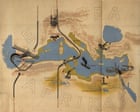
In the 1930s the German engineer Herman Sörgel proposed that a dam be built across the strait of Gibraltar to lower the level of the Mediterranean Sea by two hundred metres. Vast acreages of new and fertile lebensraum would be created, to be worked by African labourers, so alleviating an age-old cause of Europe’s wars. Europe and Africa could also be supplied with limitless hydroelectricity.
The vision swept many along with it, with leading engineers even designing the great dam. A few quibbled about the impact that draining the Med might have on things like Venice’s canals (Sörgel promised “special measures” to deal with that).
Astonishingly, the Atlantropa plan survived the second world war and limped on until the 1960s.
2. Soviet plans to modify nature
Russians have always felt short changed when it comes to climate: as the US climatologist PE Lydolph, an expert on the geography of the Soviet Union, put it: “In general, the country lacks heat.”
‘At first, the idea does sound crazy’: meet the scientists trying to refreeze the ArcticRead moreThe Soviet engineer PM Borisov had a plan to deal with that. All that was needed was to raise the temperature of the Earth by a couple of degrees and that could be achieved by building a dam across the Bering strait, so melting the Arctic ice cap.
It was a big job and other Soviet scientists countered that the same effect could be achieved by cutting a hole in the Thompson-Wyville Ridge. That would only involve excavating a mere 3,000 sq km of sea floor at depths of more than a kilometre.
This kind of thinking followed the proclamation of the “great Stalin plan for the transformation of nature” in 1948, which explored various massive engineering feats to render the Soviet environment more productive or hospitable. Decades after Stalin’s death in 1953, such ideas were still being seriously discussed, though economists protested at the expense.
3. Bombing to save the planet
The discovery of the power of the atom introduced a powerful age of techno-optimism. Harry Wexler, who led the scientific services division of the US Weather Bureau from the 1940s through to 1962, thought 10 carefully placed hydrogen bombs could do for the Arctic ice cap, heralding in an age of unprecedented warmth.
And the Russians believed that nuclear weapons were ideal for redirecting rivers. They actually detonated three devices in an effort to divert some northward-flowing rivers and were surprised to find that exploding three atomic bombs only cleared 700 metres of canal. This, and the apparently unanticipated radiation released, made it impossible to proceed.
skip past newsletter promotionFree newsletter | WeeklySign up to Five Great Reads
Each week our editors select five of the most interesting, entertaining and thoughtful reads published by Guardian Australia and our international colleagues. Sign up to receive it in your inbox every Saturday morning
after newsletter promotion
4. Making a second moon
Few attempts at geoengineering have got off the drawing board but in the 1990s Project Znamya actually achieved its objective of creating a “second moon” – though at a far smaller scale than its promoters hoped.
If geoengineering is ever deployed in a climate emergency, transparency is key | Ines CamilloniRead moreThe idea was to reflect enough sunlight on to Russia’s arctic regions to increase the illumination provided by a full moon. The mirrors took the form of reflective foldable satellites, launched in sufficient numbers to be able to significantly extend the daylight hours, providing Russians with additional warmth and energy savings. The initial batch of satellites provided a 5km patch of light. When a second bunch got stuck in the MIR space station and the declining Russian economy made the economics challenging, the project was abandoned.
5. New Australian mountains
Laurie Hogan felt that, when it came to mountains, Australia had been seriously short-changed. Its only significant mountains are low and hug the east coast, creating a narrow green strip and a vast, arid outback. Wouldn’t it be better if the mountains were further west?
He felt so strongly about this that in 1979 he published Man Made Mountain, a book that argued for the creation of a second mountain range, this one along the border of Western Australia. The new range would be 2,000km long, 4km high and 10km wide. Forty-nine great cities, all laid out on a rectangular grid, and 180,000 fish farms would ornament its slopes.
When the book failed to rally the nation behind the idea, Hogan set up a political party; the Engineered Australia Plan party, which contested the 1983 federal election. Analysis of Hogan’s plan revealed that it would require moving many times more rock than humanity has moved it its entire history. Both the book and the party have sunk without trace.
These five ideas are just the tip of the geoengineering iceberg. Over the course of history serious efforts have been made to increase rainfall, control the paths of hurricanes and use weather to win wars, all to no avail. There is no end to humanity’s monstrous egotism, it seems.
And now we face a choice: whether to geoengineer or reconcile ourselves to life in a hostile new climate.
A Brief History of Climate Folly by Tim Flannery and Emma Flannery is out now from Text Publishing
Extreme high temperatures double young people’s risk of mental health admissions, Australian research shows
2d agoNorfolk Island’s unique corals under triple threat from disease, El Niño and now government-approved dredging
4d agoDonald Trump may be the accidental hero of a feelgood climate tale even as a creeping horror story plays alongside
6d ago…… commentsA deadly strain of bird flu has landed on Australian shores. Does it pose a risk to pets?
4d agoApocalypse when? ‘Earth’s Black Box’ to be installed in remote Tasmanian airfield
17 Jun 2026NSW records first suspected case of deadly H5 bird flu as virus reaches Australia’s east coast
6d agoNSW’s deadly one-in-100-years floods could have been slashed by two metres using dams, CSIRO finds
30 Jun 2026BoM forecasts strong El Niño and warns climate change could amplify effects on Australia
16 Jun 2026The last continent: how deadly bird flu travelled the world before landing on a remote Australian beach
27 Jun 2026When is rare good news on climate science actually bad? When News Corp misrepresents it
10 Jun 2026…… comments