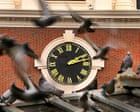
The mass transit authorities in the greater Boston region are clawing around for ways to mitigate the excessive local pigeon population – or more graphically, pigeon poo all over stations – and have swooped on the possibility of setting trained falcons on them.
The Massachusetts Bay Transportation Authority (MBTA), the public system commonly known as ‘the T’, issued a “request for information” (RFI) last month from falconry experts on the potential use of birds of prey, such as falcons, to control the crowds of urban birds widely considered a public nuisance.
“Bird droppings can carry diseases, corrode critical infrastructure, and create unsanitary conditions for the public and MBTA employees,” the authority said in the RFI.
Boston sues Trump administration over infrastructure grant withdrawalRead moreThe MBTA is best known for the subway train system serving the greater Boston and Cambridge metropolises, as well as commuter rail lines, buses and ferries.
It went on: “The MBTA currently utilizes netting and spikes at stations and facilities, and is piloting pigeon trapping at maintenance facilities. A Birds of Prey Program (BOPP) will support and enhance ongoing invasive and nuisance bird deterrents and controls.”
Passengers complain about having to dodge – sometimes successfully, sometimes not – pigeon droppings from above while traveling and also sidestepping the plentiful messy blobs on floors.
The RFI poses a number of questions that aim to “understand current capabilities and determine the merits of moving forward with a Request for Proposal (RFP) for a pilot program”: are there specific birds recommended for different facilities, types of work, invasive and nuisance birds, etc? How often should falconers/birds of prey visit? What is a typical visit duration? Are there optimal times of day/night or other scheduling considerations?
The deadline for responses from the RFI was 11 September and the outcome is awaited.
Commuters regularly complain to the authority about pigeon perils.
“Bird droppings are are health hazard in North Station,” wrote one Boston 311 complainant in March. “It has been getting worse. Pigeons are pooping all over the stairs and escalators.”
“I have personally been struck by pigeon droppings while exiting the commuter rail,” wrote another T rider in a January 311 complaint. “There is visible accumulation of droppings on the ground, particularly near Avalon and Kicco Italian Coffee,” they added.
A T spokesperson told local online news outlet StreetsblogMASS that using trained birds of prey to scare away other birds is a common form of pigeon control.
Northern California’s troubled Bay Area Rapid Transit (Bart) began using highly-trained hawks in May 2022 to combat its pigeon problem.
According to a news alert released by Bart, its board of directors approved an expansion of the falconry-based nuisance bird control initiative in 2024. Hawks and their skilled handlers work at 12 stations on a rotating basis.
Even though the deadline for responses to the RFI has passed and MBTA is still weighing up responses, the request specifies that: “No commitment to issue an RFP or pursue a pilot program is implied by the issuance of this RFI.”
However, StreetsblogMass reported that a T spokesperson confirmed there has been interest, and based on the responses, the authority will next consider issuing a formal “request for proposals” for a pilot program.