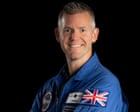
John McFall prepares for mission to Haven-1 space station after UK Space Agency signs deal with US startup Vast
Ian Sample Science editorTue 2 Jun 2026 01.00 EDTLast modified on Tue 2 Jun 2026 01.01 EDTSharePrefer the Guardian on GoogleA British Paralympian and surgeon could become the first person with a physical disability to live in orbit after the government signed a deal with a US company that is building a small commercial space station.
John McFall, a member of the European Space Agency (Esa) astronaut reserve, was cleared for activities in orbit last year and could take part in a mission to the Haven-1 space station soon after its proposed launch in 2027.
Vast, a California startup, is in the advanced stages of constructing Haven-1, which is a little smaller than a single-decker bus. The station will house up to four astronauts and features a maplewood veneer interior, a domed window for observing Earth, and a laboratory for microgravity research.
“It’s an exciting opportunity,” McFall said from Esa’s European astronaut centre in Germany. The two-week mission will focus on how the space environment affects his body and also its effects on modern prosthetic limbs, which often rely on sensors and microprocessors to function properly.
McFall’s research could bring benefits for disabled people more widely by driving designs for lighter and more adaptable prosthetics. It could also further understanding of conditions such as osteoporosis and muscle wastage, and pave the way for better rehabilitation programmes for amputees.
Beyond the scientific goals, McFall said the mission would challenge preconceptions about the jobs people with disabilities could do. “We’re saying it’s OK for people with disabilities to be astronauts,” he said. “We’ve demonstrated that it’s possible, that we’re open-minded enough to give people the opportunities to do this and recognise that they are equally capable.”
An illustration from Vast depicts the Haven-1 space station with a SpaceX Crew Dragon capsule docked. Illustration: https://www.vastspace.com/A memorandum of understanding will involve the UK Space Agency supporting Vast to secure sponsorships to fund McFall’s flight. He and other astronauts would travel to Haven-1 in SpaceX’s Crew Dragon capsule on a Falcon 9 rocket. Another option for McFall is a private mission with Vast to the International Space Station (ISS) next year.
McFall, 45, from Hampshire, lost his right leg in a motorcycle accident at the age of 19. After leaving hospital, he threw himself into sport and won bronze in the 100m at the 2008 Beijing Paralympics. He later qualified as an NHS orthopaedic surgeon. In 2022, he was selected for Esa’s Fly! project, which is exploring whether astronauts with physical disabilities can take part in long-duration missions to the ISS.
“On a personal level, it’s about the challenge, the adventure, the intrigue,” McFall said. “It’s quenching my curiosity for knowledge and science. And there’s also the craziness of it: the fact that we have the potential to have humans in space. To be part of that history is phenomenal.
“I want to be a good astronaut. I want to do my job well. That’s my priority. I don’t want it to be a PR stunt. I don’t want it to be a fad. I’m very happy to be a pioneer and do something new, but first and foremost, I want to do a good job and I want it to be of value, both for space exploration and for wider society back on Earth.”
If McFall’s flight goes ahead, he would become the first Briton in space since 2015-16, when Tim Peake spent six months on the ISS as part of Esa’s Principia mission. “John McFall is an inspiration, not just to the space community, but to everyone who has ever been told there are limits to what they can achieve,” Peake said. “This agreement is a landmark moment for inclusive human spaceflight.”
Explore more on these topicsShareReuse this contentChina launches three-crew spaceflight as part of lunar ambitions
24 May 2026Artemis II crew describe ‘overwhelming’ emotions after soaring past the moon
7 Apr 2026Relief for astronauts as fault fixed on Nasa’s $30m Artemis II toilet
2 Apr 2026Artemis II astronauts prepare to leave Earth’s orbit and head towards the moon
2 Apr 2026Artemis II marks Nasa’s new moon age, wrapped in patriotism and global promise
2 Apr 2026Humans are en route to the moon for the first time in 54 years – and Australia’s Dish is tracking them
2 Apr 2026Artemis II: Nasa’s crewed rocket lifts off to begin 10-day lunar journey – as it happened
1 Apr 2026This Artemis moon mission is a truly unifying international project, one of the few we have left
1 Apr 2026…… commentsLunar prospectors: the businesses looking to mine the moon
1 Apr 2026Artemis II lifts off from the Kennedy Space Center – in pictures
2 Apr 2026