If you get Global News from Instagram or Facebook - that will be changing. Find out how you can still connect with us.
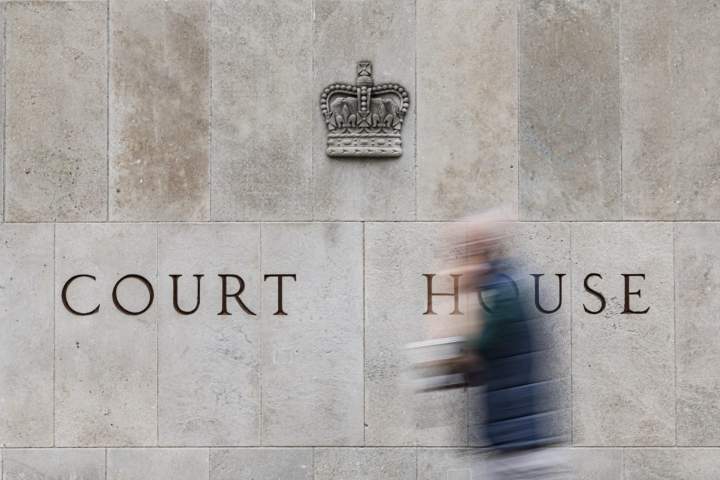
View image in full screen The Ontario Courthouse in Toronto is photographed on Monday, May 2, 2022. Christopher Katsarov/The Canadian PressA researcher working to help courts detect evidence that’s been created or altered with artificial intelligence says it’s proving difficult to come up with a tool that’s as effective in the real world as it seems to be in the lab.
Maura Grossman is co-director of a team of researchers in Canada working to make an open-source, free and easy to use tool that courts and others involved in the justice system can use to help distinguish what’s real from what’s fake.
As the two-year project nears its halfway point, she says they’ve built a system that combines state-of-the-art algorithms, which then work as a committee to vote on whether something is AI-generated.
Grossman says the two times she’s tried it in real-life situations, however, the algorithms couldn’t reach enough of a consensus to be helpful.
She says it’s a “wicked technical problem” that presents a real challenge as they continue working on the tool over the next year.
Grossman, a computer science professor at the University of Waterloo who also teaches at York University’s Osgoode Hall law school, says the next phase of the project will involve getting input from law enforcement and policymakers.
Get daily National news
Get daily Canada news delivered to your inbox so you'll never miss the day's top stories. By providing your email address, you have read and agree to Global News' Terms and Conditions and Privacy Policy.“I don’t know that I ever thought it was going to be easy, but it’s turned out to be almost daunting how challenging this task is,” she said in an interview Friday.
“We’re still hopeful, we’re still continuing to build, but I think we’ve gotten more modest in terms of thinking of one tool being the answer, as opposed to this is a problem that’s going to need some help from the law, from regulation, from policymakers, from educating people to become better at knowing how to decipher what’s real and what’s not.”
Part of what makes things tricky, she said, is that an image posted to social media, for example, will be compressed and likely stripped of its metadata, becoming very different from the original file by the time it’s presented as evidence.
“It’s not going to have that information that the original copy had, and chances are the original copy is gone three years later by the time you sue me for saying something horrible about you or whatever I did,” she said.
- Ottawa to invest up to $1.6B in Canadian AI firm Cohere
- Library and Archives Canada cracking down on AI books amid copyright threats
- AI stocks weigh on markets Thursday as oil rises to highest price since May
- Ottawa ‘not responsible’ for regulating AI data centre power use: minister
“That’s part of it, and same thing if I email it to you and you email it to six other people, the data just changes through all this transfer.”
The project is one of two inaugural research initiatives funded through the Canadian Institute for Advanced Research’s Canadian AI Safety Institute program, launched by the federal government in 2024 as part of its broader AI safety strategy.
The team includes technologists and legal scholars based in universities in Ontario and British Columbia, but its advisory board is scattered across North America and includes judges as well as organizations supporting self-represented litigants.
When the project was announced last year, Grossman said courts weren’t adequately prepared for AI. The existing commercial tools weren’t transparent or reliable enough, particularly for the judicial context, where the stakes are high, she said then.
She stressed Friday that the team never envisioned its tool as a silver bullet, adding any tool would still require human involvement and discernment.
“You’re going to need somebody to be able to testify why they think what they think and all of that,” she said.
“But there are broader components to this that need to be included in the picture, some of which is policy considerations — like maybe certain things need to prohibited altogether from being created rather than putting all the onus on detecting it after the fact.”
Add Global News as a Preferred Source on Google to see more of our stories in your search results.
Journalistic standards Report an error © 2026 The Canadian Press
