If you get Global News from Instagram or Facebook - that will be changing. Find out how you can still connect with us.
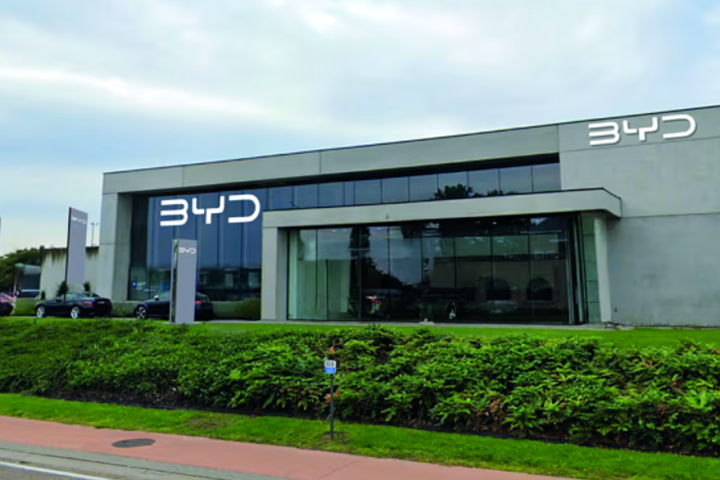
5:07 EV sales soar amid high gas prices RELATED: Electric vehicle and hybrid sales have been surging as of late. According to Statistics Canada, Canadians bought over 21,000 new zero emission vehicles in March 2026, an increase of 75 per cent compared to March 2025. With more on the recent jump in sales, we are joined by automotive journalist, Jeremy Cato. – May 16, 2026Chinese electric vehicle giant BYD says it will launch in Canada in late 2026, opening more than 20 dealerships in major cities including Toronto, Vancouver, Montreal and Calgary.
Stella Li, executive vice-president of BYD and president of BYD Americas, confirmed Tuesday the company will begin rolling out the dealerships as Ottawa’s new trade agreement with Beijing reshapes Canada’s EV landscape, confirmed on social media.
The company’s first phase of vehicles in Canada will include the Atto 3 compact SUV, the Seal sedan and the Dolphin hatchback.
A second phase is expected to introduce the Seagull city car, which could start at around CAD$25,000, according to Li, potentially making it the cheapest electric vehicle available in Canada.
The launch marks BYD’s first public confirmation of its Canadian expansion timeline and model lineup after months of industry speculation.
Analysts and dealer consultants had reported signs of preparations earlier this year after the company hired a Markham, Ont.-based automotive retail consultancy to scout dealership locations.
Get daily National news
Get daily Canada news delivered to your inbox so you'll never miss the day's top stories. By providing your email address, you have read and agree to Global News' Terms and Conditions and Privacy Policy.BYD’s expansion comes after a January 2026 trade agreement between Ottawa and Beijing replaced Canada’s previous 100 per cent tariff on Chinese-made EVs with a reduced 6.1 per cent tariff under an annual quota system.
The agreement allows up to 49,000 Chinese-made electric vehicles into Canada annually, with the cap set to rise to 70,000 by 2030.
In exchange, China reduced tariffs on Canadian agricultural exports including canola, lobster, crab and peas, according to Global Affairs Canada.
- Canada’s big banks brace for more bad loans, focus on ‘de-risking’
- Rising threat of ‘distraction’ auto thefts ‘can pop up anywhere,’ says CAA
- As grads enter tough job market, moving home ‘makes perfect sense’: experts
- Ferrari’s stock fell after launching its first-ever EV. What’s going on?
Earlier this year, Ford repeatedly criticized Prime Minister Mark Carney’s decision to reduce tariffs on up to 49,000 Chinese-made electric vehicles in exchange for reduced duties and suggested the lack of direct communication from Carney has potentially damaged the relationship between the two leaders.
“I’m disappointed because we had such a great relationship,” Ford said. “And I look forward to continuing the great relationship, but it’s all about communication, collaboration and partnership. At least I know where I stand, though.”
However, Ontario is now expected to become a key battleground for BYD’s Canadian ambitions.
The province currently has an EV market share of about 6.5 per cent, significantly lower than British Columbia and Quebec, while also serving as the centre of Canada’s automotive manufacturing industry and home to major auto unions including Unifor..
–with files from Global News’ Isaac Callan & Collin D’Mello
Add Global News as a Preferred Source on Google to see more of our stories in your search results.
Journalistic standards Report an error © 2026 Global News, a division of Corus Entertainment Inc.