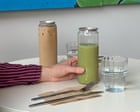
A single-use plastic and metal drinking vessel dubbed a “franken-can” has been given the dubious honour of the nation’s worst plastic packaging.
The plastic-metal hybrid can, which is not accepted by container refund schemes or easily recycled – has won the inaugural Unpackit award for Australia’s worst packaging.
The Unpackit awards have been established by the Australian Marine Conservation Society (AMCS), Plastic Free Foundation and WWF-Australia to highlight the volume of plastic packaging used by Australians each year – an estimated 1.3m tonnes.
Cip Hamilton, plastics campaigns manager for AMCS, said of the inaugural award winner: “The franken-can is a completely unnecessary plastic-metal hybrid can that essentially ticks every box for problematic packaging.”
‘We really need the government to be making producers responsible for the full life cycle of their packaging,’ says AMCS’s Cip Hamilton. Photograph: Unpackit Awards“We’re seeing cafes use these single-use plastic items for customers who are dining in,” replacing reusable cups and glasses, she added.
“They’re likely to end up as street litter, and they’re not accepted by containment refund schemes as other beverage containers are,” she said. “They’re really problematic and really have no place in our economy.”
The cans have already been banned in Western Australia, but Hamilton said: “Unfortunately, it’s a state-by-state model at the moment. The Australian government’s very overdue in its national packaging laws.
“We really need the government to be making producers responsible for the full life cycle of their packaging.”
The winner of Australia’s best packaging was the Udder Way refillable milk kegs, which have averted the need for 4.5m single-use plastic milk bottles since 2021. Photograph: Unpackit AwardsDishonourable mentions for worst packaging included major supermarkets for wrapping avocadoes in unnecessary plastic netting, and individually wrapped Mentos mints.
Almost 60% of litter collected in Australia is packaging, and the Unpackit awards also acknowledged ideas that address the issue of plastic pollution.
Sign up for the Breaking News Australia emailThe winner of the award for Australia’s best packaging was the Udder Way’s 18L refillable milk kegs, which work like beer kegs and have averted the need for an estimated 4.5m single-use plastic milk bottles since 2021.
WWF-Australia’s No Plastic in Nature policy manager, Malene Hand, described the Udder Way as “a brilliantly simple alternative to single-use plastic milk bottles”.
“The idea came from Tasmanian cafe owner Ed Crick, who was tired of seeing plastic milk bottles piling up at his cafe every day,” she said in a statement.
Hamilton said the milk kegs were available in venues using high volumes of milk, such as cafes and event spaces, and were beginning to be rolled out in supermarkets for refills for individual consumers – timely given strait of Hormuz-related increases in the price of resins for making plastic containers.
Honourable mentions went to Bearhug for its reusable pallet wrap system, and to Cercle’s cafe-based reusable coffee cup system.
From bottles to bars: easy swaps to cut plastic from your personal care routineRead moreBearhug was “started by a truck driver who saw pallets being reused with every load, but the single-use wrap … ending up in the bin”, Hamilton said. One Bearhug wrap displaces 350kg of single-use plastic over its lifetime, and has avoided the need for 25 tonnes of soft plastics in 12 months.
Unpackit was based on awards by the same name established in New Zealand more than a decade ago, Hamilton said. “What we saw there was businesses changing in the way they were packaging their products in response to these awards.
“The only way we will end plastic pollution is cutting back on how much plastic is being produced, and holding producers responsible for what they’re putting on their shelves.”
Independent MPs Zali Steggall, Sophie Scamps and Kate Chaney announced the Unpackit award winners in Canberra on Wednesday morning.
Stuart Alexander & Co., which manages the Mentos portfolio in Australia, was contacted for comment.