If you get Global News from Instagram or Facebook - that will be changing. Find out how you can still connect with us.
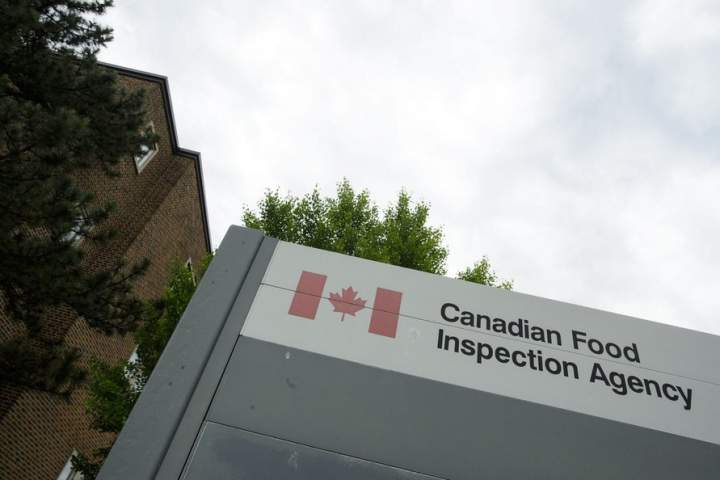
View image in full screen The Canadian Food Inspection Agency is seen in Ottawa on June 26, 2019. THE CANADIAN PRESS/Sean KilpatrickThe Canadian Food Inspection Agency (CFIA) has issued a notice to Canadian consumers about reports of outbreaks of pseudorabies in commercial swine in the United States.
Pseudorabies, also known as Aujesky’s disease, doesn’t sicken humans but it can infect animals like cattle, sheep, goats, dogs, cats, mink, foxes, raccoons and rats, causing fatal rabies-like signs and severe itching, according to the CFIA.
The CFIA states that shipments that have already been certified “will be permitted to enter Canada.”
Get weekly health news
Receive the latest medical news and health information delivered to you every Sunday. By providing your email address, you have read and agree to Global News' Terms and Conditions and Privacy Policy.The United States Department of Agriculture will not be issuing export certificates for the following products until further notice:
- uncooked edible pork snouts
- uncooked edible porcine blood
- raw inedible porcine by-products (with the exception of raw pig ears, which are still allowed)
- untreated inedible porcine blood products
- raw porcine manure
Other porcine commodities, such as edible pork meat and raw pet food containing pork products, do not pose a risk of transmission of this disease and these imports may continue as usual.
- Payouts are hitting Canadian bank accounts in bread price-fixing settlement
- Beer, alcohol sales falling amid consumer strain and shifting priorities
- Petroleum and coal product sales highest since September 2023: StatCan
- Ottawa, Alberta agree on carbon pricing deal, pipeline construction timeline
Mexico suspended imports of some American pork products due to pseudorabies concerns on Thursday.
The USDA reported on April 30 that routine testing detected pseudorabies virus antibodies in five boars at a commercial facility in Iowa, which came from an outdoor facility in Texas.
It was the first known U.S. case of pseudorabies in commercial swine since 2004.
Add Global News as a Preferred Source on Google to see more of our stories in your search results.
Journalistic standards Report an error © 2026 Global News, a division of Corus Entertainment Inc.