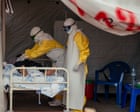
Tedros Adhanom Ghebreyesus says the virus ‘had a big head start’ but that the response was catching up
Supported byAbout this contentKat Lay Global health correspondentWed 3 Jun 2026 13.29 EDTSharePrefer the Guardian on GoogleThe Ebola outbreak in the Democratic Republic of the Congo could have begun as early as January, the head of the World Health Organization said, giving the virus “a big head start”.
Dr Tedros Adhanom Ghebreyesus also said the response was being hindered by blanket travel restrictions and highlighted high levels of community mistrust and low levels of contact tracing as key concerns.
Since the outbreak was identified in mid-May, the Bundibugyo virus has caused 344 confirmed Ebola cases including 60 deaths in DRC, and 15 confirmed cases including one death in neighbouring Uganda.
“The outbreak had a big head start, and we’re still behind” but the response was catching up, Tedros said, with treatment centres now established across Ituri province, the most affected part of DRC.
He called on countries that have imposed blanket travel restrictions, such as the US, to lift them. They “are disrupting supply chains and hindering the response”, he said.
Contact tracing, a key element of the response to any infectious disease outbreak, is being made particularly difficult by insecurity and displacement in Ituri, he said, with only about 45% of contacts followed up.
“To get ahead of the outbreak we need to get that number up to above 90%,” he said.
The number of suspected cases in DRC fell abruptly on Tuesday from more than 1,000 to 116, as officials worked through a testing backlog to either confirm them or rule them out.
Burials and tears as Ebola outbreak continues to spread in DRC – in picturesRead moreTedros said it was a key priority to scale up laboratory and diagnostic capacity in the most affected areas as well as neighbouring provinces and countries.
The first identified case in the outbreak was a nurse who went to a health centre on 24 April, but Tedros said there were alternative scenarios.
“It could be January, it could be February, March, April,” he said. “But I think the focus now should be on the response.”
Mistrust was a serious barrier, he said, with some community leaders telling him during a visit to DRC last week that they did not believe Ebola was real. He said they also worried that the response would take resources away from other vital services.
There is currently no vaccine or treatment for the Bundibugyo strain of the virus, but Tedros said the recovery of six people in DRC and two in Uganda showed that people could survive Ebola if they had access to care and went to health facilities as soon as they showed symptoms.
The UK’s Foreign, Commonwealth and Development Office has announced the launch of multi-hazard research network through which experts from the UK and international partners could provide rapid advice and evidence on emerging infectious diseases and other crises, including the current Ebola outbreak.
Explore more on these topicsShareReuse this content‘We don’t have another country to run to’: Kenyans fear US plan for Ebola quarantine site
23h ago‘Every health facility said they were full’: alarm over rapid spread of Ebola in DRC
23 May 2026WHO calls for community cooperation to contain Ebola outbreak in DRC
3d agoWHO puts Ebola outbreak death rate at ‘huge’ 30-50% as chief arrives in DRC
5d agoEbola: US ban on travellers from DRC, Uganda or South Sudan ‘not the solution’
21 May 2026‘Among the things he feared most was death’: the doctors and nurses dying on the Ebola frontline
6d agoAs WHO sounds alarm over Ebola in DRC, what can be learned from previous outbreaks?
19 May 2026US building Ebola quarantine center in Kenya for Americans amid outbreak
7d ago