A senior executive at Uber has publicly questioned whether the ridesharing company’s substantial investment in AI technology is delivering adequate returns, highlighting growing concerns about AI spending across the tech industry.
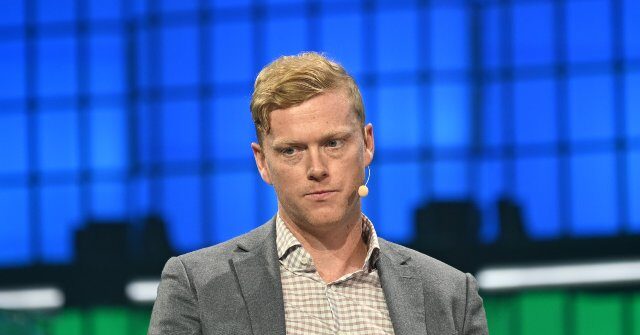
Business Insider reports that Uber COO Andrew Macdonald expressed doubts about the value proposition of the company’s AI expenditures during a Rapid Response interview released on Saturday. His comments reflect a broader conversation within the technology sector about whether massive investments in AI tools are translating into tangible business benefits.
The discussion was sparked by comments from Uber’s Chief Technology Officer, Praveen Neppalli Naga, who revealed in an April interview with the Information that the company had already exhausted its Claude Code AI budget for 2026. This revelation went viral and created what Macdonald described as a “head-exploding moment” within the organization, triggering internal discussions about AI token consumption and the associated trade-offs, including potential impacts on hiring and staffing levels.
Macdonald’s primary concern centers on the lack of a clear correlation between increased AI token usage and the development of useful consumer features. After consulting with Uber’s senior engineering leadership, he found that higher levels of AI usage did not necessarily result in a proportional increase in valuable features for customers. “That link is not there yet, right?” Macdonald said. “I think maybe implicitly there is more that is getting shipped, but it’s very hard to draw a line between one of those stats and, ‘Okay, now we’re actually producing 25 percent more useful consumer features.'”
The challenge of justifying AI costs has become more acute because executives cannot establish a direct connection between spending and tangible outcomes. This difficulty in demonstrating return on investment comes at a time when Uber is making significant financial commitments to AI technology. Earlier this month, CEO Dara Khosrowshahi announced during an earnings call that the company was slowing its hiring pace to offset its AI investments.
Macdonald also highlighted a common misconception about AI costs within organizations. He noted that AI can appear to be free from the perspective of individual employees who are simply exploring interesting use cases without directly paying for the technology. However, these costs ultimately accumulate at the company level, creating significant financial obligations.
While many major technology companies have embraced what is known as “tokenmaxxing” — maximizing the use of AI tools across their operations and even evaluating employees based on their AI usage — some organizations are beginning to reconsider this approach. The trend reflects growing skepticism about whether aggressive AI adoption necessarily leads to better business outcomes.
Duolingo serves as a notable example of this shift in thinking. The language-learning platform initially included AI usage as a factor in employee performance reviews but later reversed this decision after employees raised concerns about whether they were being pressured to use AI simply for the sake of using it, rather than because it genuinely improved their work.
“It felt like, rather than being held accountable for the actual outcome, we were trying to just push something that in some cases did not fit,” Duolingo CEO Luis von Ahn said in a podcast interview in April. His comments echo the sentiment expressed by Macdonald and suggest that some technology leaders are prioritizing measurable outcomes over the mere adoption of AI tools.
AI is an increasingly divisive topic in the business world as it transitions from the novelty of AI to the actual business case. Breitbart News social media director Wynton Hall has written his instant bestseller Code Red: The Left, the Right, China, and the Race to Control AI to serve as the definitive guide on how the MAGA movement can create positions on AI that benefit humanity without handing control of our nation to the leftists of Silicon Valley or allowing the Chinese to take over the world.
Read more at Business Insider here.
Lucas Nolan is a reporter for Breitbart News covering issues of AI, free speech, and online censorship.
