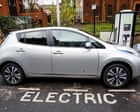
EVs with 90,000 to 120,000 miles on the clock are more likely to pass MOTs than petrol models of the same age
Zoe WoodTue 22 Sep 2026 09.37 EDTLast modified on Tue 22 Sep 2026 09.55 EDTSharePrefer the Guardian on GoogleMotorists buying a secondhand car with a lot of miles on the clock are likely to find an electric vehicle (EV) ultimately more reliable than a petrol vehicle, according to a study.
An analysis of 47.4m MOT tests found that after cars were driven 90,000 to 120,000 miles, EVs were about 25% less likely to fail than petrol models of the same age (based on a failure rate of 16.5% versus 22.1%).
Beyond 120,000 miles, 16% of EVs failed, compared with 23.5% of petrol cars. The study found relatively little difference between the two fuel types at lower mileages.
Range Rover launches its first electric vehicle, with starting price of £154,070Read moreThe study by the consultancy New AutoMotive on behalf of the industry group the British Vehicle Rental and Leasing Association (BVRLA) comes as a growing number of EVs change hands. Many used to belong to company and leasing fleets so have potentially racked up a lot of miles.
Toby Poston, the BVRLA chief executive, said that mileage is “one of the first things people look at when buying a used car, and passing 60,000 or 70,000 miles can have a big impact on how a vehicle is perceived”.
He added: “What this data shows is that mileage alone should not put consumers off. A well-maintained, higher-mileage electric car can be an extremely durable used vehicle.
“That matters because the used market is where the transition to electric becomes accessible to millions more motorists. Giving buyers confidence in these cars will be critical to creating a healthy and affordable secondhand EV market.”
Ben Nelmes, the chief executive of New AutoMotive, which carried out the research, said that high mileage “isn’t a proxy for poor condition in the way buyers have traditionally assumed. The data suggests the mechanical simplicity of an electric drivetrain starts to become increasingly valuable as cars accumulate miles.”
The study also identified areas where electric cars performed worse, particularly tyres. EVs recorded nearly twice as many tyre defects as petrol cars and older, low-mileage electric cars showed increased friction-brake defects. Researchers attributed the latter to corrosion associated with the brakes being used less frequently.
skip past newsletter promotionFree newsletter |Every weekdaySign up to Business Today
Get set for the working day – we'll point you to all the business news and analysis you need every morning
after newsletter promotion
MOT tests examine statutory roadworthiness, including brakes, tyres, suspension, steering and lights, but do not measure battery health, degradation or charging performance. This information would therefore need to be considered alongside mechanical roadworthiness when assessing any used EV, the researchers said.
“This isn’t an argument for buying a used EV without doing your homework,” Poston said. “Buyers should look at its history, condition, tyres and battery health just as they would scrutinise the engine, gearbox and service history of a petrol or diesel car.
“What we can now challenge is the idea that an electric car with 80,000 or 100,000 miles on the clock should automatically be regarded as worn out.”
Explore more on these topics- Electric, hybrid and low-emission cars
- Motoring (Money)
- Motoring (Technology)
- Automotive industry
- Greenhouse gas emissions
- news
Burnham criticised for EV and North Sea approach amid climate crisis
14 Aug 2026Chinese EV sales surge to new high in Europe putting tariffs under scrutiny
9 Aug 2026Carmakers ‘delaying investment in UK factories until EV sales rules relaxed’
30 Jul 2026Delhi plans to ban petrol rickshaws and scooters in effort to cut toxic fumes
30 Jun 2026‘Fork in the road’: CEO of Amazon-backed Rivian on why carmakers need to invest in EVs
26 Jun 2026Backlash against ‘short-termist’ UK plans to weaken EV sales targets
15 Jun 2026UK poised to water down 2030 EV sales targets after industry and union pressure
14 Jun 2026Car industry pressing EU for further delay to Brexit EV tariffs
7 Jun 2026UK car sales hit post-Covid high for May as Chinese EV makers gain ground
4 Jun 2026Reliance on Chinese green tech poses ‘serious’ risk for Europe, experts say
29 Apr 2026