Adaptation to frightening new normal and reducing emissions further and faster is critical, scientists warn
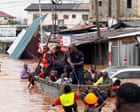
Wed 15 Jul 2026 20.01 EDTLast modified on Wed 15 Jul 2026 21.21 EDTShareDozens of people drowned, hundreds had to be rescued and thousands were displaced when floods struck the coasts of west Africa last month.
Now scientists have concluded that the rains that caused the floods were supercharged by climate breakdown. Global heating, they say, turned what should have been a routine weather event into a climate catastrophe.
They also warn that the countries affected must adapt to a frightening new reality. “The climate is changing faster than most nations can adapt,” said Friederike Otto, a professor of climate science at Imperial College London.
“Adapting to these now common events is critical, but so is reducing emissions much further and faster, to allow us time to keep up with the changes we’ve already put into motion. Quite simply, until emissions stop these extremes will only grow worse.”
Residents on the Gulf of Guinea coast expect rain this time of year. Rainy season runs from May until the end of July. Granted, this year it had been particularly heavy, but what began on 20 June caught people by surprise.
A motorcyclist rides along a flooded street in Lagos, Nigeria, on 30 June. Photograph: Olympia de Maismont/AFP/GettyOver the course of 72 hours, intense rainfall drenched the densely populated coastal regions of Côte d’Ivoire, Ghana, Togo and Nigeria. More than 140mm of rain fell in some cities in less than a day. The deluge overwhelmed drainage systems, triggering a series of flash floods.
‘Every time the rain falls, the fear comes back’: life in Lagos under the constant threat of floodsRead moreFrom Lagos to Monrovia in Liberia, the overflow inundated neighbourhoods and washed away markets. It submerged roads and swamped infrastructure. At least 34 people died in Ghana. Five died in Togo. In Côte d’Ivoire, 59 have died as a result of floods since May.
On Thursday, Otto and the World Weather Attribution team said such a deluge was five times more likely in today’s climate. Heavy, three-day downpours in the region had increased in intensity by roughly 23% since record-keeping began, they said.
It will not be long until something similar occurs again, they warned. With the climate 1.4C hotter than before the industrial use of fossil fuels, they expect rainfall of a similar scale to explode above the Gulf of Guinea every two to four years.
To quantify the role the climate crisis had played in the disaster, scientists compared historical weather observations with climate model simulations. They focused specifically on the three most extreme days of rainfall.
skip past newsletter promotionFree newsletter | WeeklySign up to Down to Earth
The planet's most important stories. Get all the week's environment news - the good, the bad and the essential
after newsletter promotion
Pedestrians wade through a flooded street in Lagos on 3 July. Photograph: Olympia de Maismont/AFP/GettyCôte d’Ivoire floods kill 59 as west Africa endures torrential rainsRead moreDespite climate models often struggling to recreate similar events in regions in the global south, they showed climate change had caused a 4% increase in intensity. The researchers said this made them confident that greenhouse gas emissions had intensified the event.
Joyce Kimutai, who researches extreme weather and climate change at Imperial College London, was the lead author on the study. She said: “Climate models typically struggle to capture the full scale of tropical precipitation trends when we look at extreme events like this one.
“As such, the fact that we found such a role for climate change is significant. Combined with the very wetter trend in the observational-based data, it’s clear that human-caused warming made this event worse, and wetter, with devastating impacts.
“This study is a clear example of the need for international cooperation on climate justice. Industrialised nations have a responsibility to help nations like Togo, Côte d’Ivoire and Ghana to adapt to a worsening problem that they didn’t cause.”
Explore more on these topicsShareReuse this contentRising temperatures may increase flood risk through river ‘whiplash’, study finds
17 Jun 2026Wild weather unleashes thunderstorms across south-east Australia, triggering flash flooding
28 May 2026Why Michigan is emerging as one of America’s worst-hit climate states
25 May 2026Weather tracker: Heavy rain triggers flooding and landslides in parts of China
22 May 2026Why do we keep building on land at risk of flooding?
14 May 2026Urban areas host 80% of England’s homes at high risk of flooding, study finds
29 Apr 2026How a lush Miami park was designed to keep flooding at bay – in pictures
2 Apr 2026‘I’ve never seen anything like it’: Hawaii’s small farmers begin recovery after catastrophic flooding
29 Mar 2026‘Like a sea out there’: flooded Somerset residents wonder how water can be managed
28 Jan 2026