Global financial institution predicts GDP will grow to just 1.6% in 2027 as Treasury faces rising energy costs and inflation
Get our breaking news email, free app or daily news podcast
The International Monetary Fund has downgraded its forecast for Australia’s economic growth in 2027, warning that the Reserve Bank may have to hike interest rates further to get price pressures back under control.
The IMF also called on federal and state governments to tighten their belts, with a new report saying more disciplined budgets will rein in rising debt burdens and help solve Australia’s long-running inflation problem.
In a “concluding statement” that followed annual consultations with Treasury, RBA and Australian Prudential Regulation Authority officials, the Washington-based institution predicted that the economy would grow by 1.9% this year.
But it shaved 0.1 percentage points off its forecast for real GDP growth to just 1.6% in 2027, flagging the downgrade was due to the higher likelihood of another RBA interest rate hike.
“Inflation remains a central challenge, while weak productivity growth is weighing on the economy’s potential,” the statement said.
“There is a risk that further large increases in global energy prices lead to stronger second-round effects and lift inflation expectations, warranting further tightening” in monetary policy.
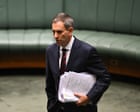
Sign up for the Breaking News Australia emailThe new assessment will come as a blow to Jim Chalmers, the treasurer, who is already under pressure to present a convincing story of improving living standards and prosperity.
Fuel prices in Australia are rising again after the worsening Middle East conflict pushed the global oil benchmark, Brent crude, above US$108 a barrel on Wednesday, marking a 35% surge since the start of August.
As global energy costs climb and threaten to spill over into domestic inflation, financial markets are pricing in an 80% chance of a RBA rate hike on 29 September.
The IMF largely backed – or at least did not overtly criticise – Labor’s budget changes to investor taxes, although it noted widely publicised concerns around unintended consequences.
“Changes to capital gains taxation and negative gearing can reduce housing-related distortions, but continued efforts to minimise compliance costs and impact on investment are needed during implementation,” the report said.
skip past newsletter promotionFree newsletter |When neededSign up to Breaking News Australia
Get the most important news as it breaks
after newsletter promotion
‘Small price to pay’: the young homeowners welcoming falling house prices even as it hurts themRead moreHouse price falls had done little to address unaffordable housing, the IMF said. It welcomed the steps taken to boost housing supply, even as it urged states and the federal government to do more.
The report noted that the combined federal and state deficit had widened over the past two years as states spent big on infrastructure projects, along with higher social services costs, especially in healthcare and the national disability insurance scheme.
There was also taxpayer money committed to cushioning the impact of the initial global energy price shock, most notably through cuts to the fuel excise.
New South Wales and Queensland spend more than twice as much on debt interest now than before the pandemic, according to Challenger.
And while “Australia’s overall public debt remains relatively low compared to many other advanced economies”, the IMF officials pointed to rising debts and interest costs, especially in state governments.
“The ongoing efforts to restrain general government spending, amidst strong private demand, would also support disinflation efforts by the RBA.”
In the longer term, poor productivity growth was “Australia’s key structural challenge”, the IMF said.
“Reversing the slowdown in recent years will be crucial to improving living standards” and making our public and private debt obligations sustainable over the long run.
The comments come before Monday’s release of the government’s latest intergenerational report, which will paint a long-term and likely challenging picture of Australia’s economy and budget.
Explore more on these topics- Australian economy
- Economics
- Business
- Jim Chalmers
- Australian politics
- International Monetary Fund (IMF)
- Interest rates
- news