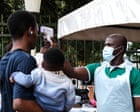
The world is becoming less resilient to outbreaks of infectious diseases, experts have warned, as health authorities in the Democratic Republic of the Congo and Uganda scramble to contain an outbreak of Ebola.
The Global Preparedness Monitoring Board (GPMB) said in a report published on Monday that “as infectious disease outbreaks become more frequent they are also becoming more damaging”, warning that pandemic risk is outpacing investments in preparedness and “the world is not yet meaningfully safer”.
Disease outbreaks are becoming more likely due to the climate crisis and armed conflict, while collective action is being undermined by geopolitical fragmentation and commercial self-interest, the report said.
The GPMB is a group of experts established in 2018 by the World Bank and the World Health Organization (WHO) after the first large scale Ebola outbreak in west Africa and just before Covid-19. Its latest findings come amid global attention on the hantavirus outbreak on a cruise ship and a day after the declaration of an international public health emergency after at least 87 Ebola deaths in the DRC.
A passenger is sprayed with disinfectant by Spanish officials before boarding a plane at Tenerife airport, after disembarking from the hantavirus-stricken cruise ship MV Hondius, Spain, 10 May, 2026. Photograph: APThe two outbreaks “are just the latest crises in our troubled world”, WHO chief Tedros Adhanom Ghebreyesus told the opening of the UN agency’s World Health Assembly in Geneva.
WHO’s representative in the DRC, Anne Ancia, told Reuters that in responding to the Ebola outbreak it had emptied its stocks of protective equipment in the capital, Kinshasa, and was preparing a cargo plane to bring additional supplies from a depot in Kenya. The International Rescue Committee and Médecins Sans Frontières aid groups said they had teams responding to the outbreak.
In Geneva, Prof Matthew Kavanagh, director of the Georgetown University Center for Global Health Policy & Politics, said aid cuts may have played a role in leaving the world “playing catch-up against a very dangerous pathogen”.
He said: “Because early tests looked for the wrong strain of Ebola, we got false negatives and lost weeks of response time. By the time the alarm was raised, the virus had already moved along major transport routes and crossed borders.
“This crisis didn’t happen in a vacuum. When you pull billions out of the WHO and dismantle frontline USAID programmes, you gut the exact surveillance system meant to catch these viruses early. We are seeing the direct, deadly consequences of treating global health security as an optional expense.”
World ‘unprepared’ for next pandemic as countries fail to agree on sharing information, tests and vaccinesRead moreThe GPMB report finds that new technologies, including novel vaccine platforms such as mRNA, have “advanced at unprecedented speed” and billions of dollars have been invested in pandemic preparedness and response.
But the world is “moving backwards” on measures such as ensuring equitable access to vaccines, tests and treatments, it found. During recent mpox outbreaks, vaccines took almost two years to reach affected countries in Africa, which is even slower than the 17 months it took for Covid-19 vaccines to be distributed.
Outbreaks had damaged trust in government, civil liberties and democratic norms, amplified by politicised responses and attacks on scientific institutions, the GPMB warned. These had outlasted the crises themselves and left societies “less resilient to the next emergency”, it said.
Kolinda Grabar-Kitarović, GPMB co-chair and former president of Croatia, said: “The world does not lack solutions. But without trust and equity, those solutions will not reach the people who need them most.
BioNTech researchers, who made the mRNA-based Covid-19 vaccine in 2021. The GPMB cited mRNA as an example of the ‘unprecedented speed’ of medical advances. Photograph: Getty“Political leaders, industry and civil society can still change the trajectory of global preparedness – if they turn their commitments into measurable progress before the next crisis strikes,” she said.
Countries failed to meet a deadline to finalise the pandemic agreement treaty before this week’s World Health Assembly in Geneva, after disagreements over guarantees of access to medical tests, vaccines and treatments in exchange for sharing information on any pathogens emerging on their territories.
The GPMB called on political leaders to establish a permanent, independent monitoring mechanism to track pandemic risk, conclude the pandemic agreement to ensure equitable access to vaccines, diagnostic tests and medicines, and put in place financing to secure preparedness and immediate responses to outbreaks.
Joy Phumaphi, the GPMB co-chair and a former health minister in Botswana, said: “If trust and cooperation continue to fracture, every country will be more exposed when the next pandemic strikes.”