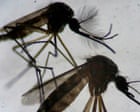
Climate crisis could increase incursions of Aedes aegypti, which can transmit Zika virus and dengue, experts say
Pippa Neill Environment reporterThu 3 Sep 2026 08.51 EDTLast modified on Thu 3 Sep 2026 08.53 EDTSharePrefer the Guardian on GoogleAn invasive mosquito capable of transmitting tropical diseases has been found breeding in homes in east London, with warnings that the rapidly warming climate will lead to greater “incursions of invasive mosquitoes”.
This is the first time the species has been identified breeding in the UK and the fourth time it has been detected.
Aedes aegypti, which are normally found in tropical and subtropical regions, can transmit dengue, chikungunya and Zika virus in countries where these infections are circulating.
While none of these diseases are deadly, they can cause complications, with Zika virus linked to serious problems during and after pregnancy.
The UK Health Security Agency (UKHSA) said the risk to the public was low, with no evidence that the mosquitoes in east London have have caused human infections.
The initial finding was reported through UKHSA’s mosquito watch surveillance scheme. The agency said the species could have come into the UK through vehicles, baggage and imported plants and, if the insects found a suitable climate, they could survive.
It said that despite evidence of breeding, the species was not established in the UK and could not survive for long in the typical UK climate, which was too cold.
However, the agency warned that in a warming climate, “we will continue to see incursions of invasive mosquitoes, and increased reports of them being able to survive in the UK”.
David Smith, advocacy and social change manager at the charity Buglife, said the rapidly warming climate was creating conditions that were more favourable for exotic and potentially invasive species to establish in the UK.
A study earlier this year found that chikungunya, an excruciating tropical disease, can now be transmitted in most of Europe because of higher temperatures caused by the climate crisis. The analysis was the first to assess the effect of temperature on the incubation time of the virus in the Asian tiger mosquito.
Smith said: “Recent reports of non-native invertebrates, including mosquito species, highlight the urgent need for the government to strengthen biosecurity, improve surveillance and address pathways such as the movement of potted plants and soils, through which numerous invertebrates can hitchhike undetected.”
The UKHSA said control measures had been implemented to destroy the larvae, and the area would continue to be monitored closely to identify and eradicate any further mosquitoes and larvae.
It advised residents to remove standing water from gardens and outdoor spaces, including from buckets, containers, paddling pools and plant pots, to reduce opportunities for all species of mosquitoes to breed.
Explore more on these topicsShareReuse this contentColombian tree frog found by Sheffield florist highlights invasive species threat
17 Jan 2025‘Grey lump with orange wings’: hummingbird hawk-moths descend on UK gardens
30 Jul 2026Mosquitoes can become attracted to insect repellant, study suggests
28 May 2026‘Substantial’ increase in grey squirrels in England is concerning, campaigners say
3 Dec 2024Colony of invasive red dwarf honeybee found for first time in Europe
30 Aug 2024Midsummer butterflies spotted early in Britain after sunny spring
9 May 2025The truth about Asian hornets: how terrified should humans and honeybees actually be?
23 May 2024South Wales villagers tormented by mystery plague of flies
13 Sept 2024Chris Packham on the Asian hornet: there are bigger enemies than these bovver buzzers
11 Apr 2024Rare moth found in Norfolk village 50 years after becoming ‘extinct’ in Britain
5 Sept 2024