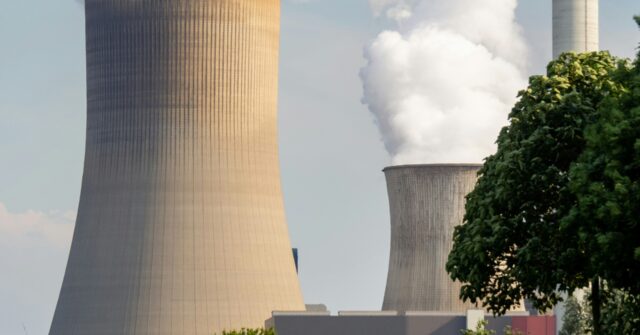
ROME (AP) – Italy´s Senate on Wednesday gave final approval to legislation paving the way for a return to nuclear power nearly four decades after the Chernobyl disaster prompted the country to abandon atomic energy.
The measure cleared the upper house 81-51 with seven abstentions. It marks a major step in Premier Giorgia Meloni´s drive to bolster energy security and meet climate goals, even though the construction of possible new reactors is still years away.
The bill, which earlier passed the lower Chamber of Deputies, establishes a legal framework for next-generation nuclear technologies. It authorizes the government to draft implementing decrees over the next 12 months covering reactor licensing, safety standards, waste management and criteria for future sites.
The vote puts Italy on a path toward reintroducing nuclear power after voters twice rejected it in national referendums, first in the aftermath of the 1986 Chernobyl disaster and again following Japan´s Fukushima accident in 2011.
Gilberto Pichetto Fratin, minister for the environment and energy security, said the vote marked a historic step forward for Italy.
“Nuclear isn’t a return to the past,” he said. “When integrated with renewables, it’s a winning technology, which can give extraordinary results for our energy security.”
Meloni´s government argues that rising electricity demand, climate targets and energy security concerns exposed by Russia´s invasion of Ukraine justify bringing nuclear energy back into the country´s power mix.
Rather than reviving the large reactors of the past, the government is focusing on small modular reactors, or SMRs, and other advanced technologies that supporters say could be safer, more flexible and quicker to build.
The legislation does not authorize the construction of any reactors. Instead, it creates the regulatory foundation needed before future projects can be proposed, assessed and approved.
Italy was once among Europe´s nuclear pioneers, operating four reactors before a 1987 referendum effectively ended the program. Since then, the country has relied heavily on imported energy and has become one of Europe´s largest consumers of electricity generated by nuclear plants in neighboring countries.
The government says electricity demand could rise substantially in coming years as homes, businesses and transportation become increasingly electrified and as data centers and other energy-intensive technologies expand.
Italy´s move comes amid a broader European debate over nuclear power´s role in cutting carbon emissions and reducing dependence on imported fossil fuels. Countries including France and Poland are investing in new nuclear projects or planning major expansions.
Public attitudes in Italy appear to have shifted. A June 2026 survey by research firm Only Numbers found that about 55% of Italians support next-generation nuclear plants, with backing strongest among younger generations who have no direct memory of Chernobyl.
Even so, significant obstacles remain before any reactors could be built.
Italy still lacks a permanent national repository for radioactive waste from its previous nuclear program, with waste continuing to be stored at temporary facilities around the country. Future reactor projects and waste storage sites are also expected to face opposition from local communities.
Energy analysts have questioned the economics of nuclear power, pointing to high construction costs and the lack of commercially proven SMR projects operating at scale in Europe. Industry estimates place the cost of a single 300-megawatt SMR at between 3 billion and 6 billion euros ($3.5 billion and $7 billion), excluding additional infrastructure and grid expenses.
Michele Governatori, a senior energy adviser at climate and energy think tank ECCO, welcomed the creation of a regulatory framework but said it would likely expose limited private-sector appetite for new nuclear projects.
“Having a regulatory framework in place is positive, but it will also make clear the limited interest of private investors in technologies that are either not competitive today or not yet ready, such as SMRs,” he said.
Governatori also said that Italy should focus on measures already available to cut energy costs and reduce reliance on fossil fuels, including electrification, energy efficiency, renewable energy, storage capacity and power-grid upgrades.
Environmental groups and opposition parties have already signaled resistance to the government´s plans and could challenge future projects once specific reactor and waste-storage sites are proposed.
