Rodents arrived on the subtropical island more than a century ago, decimating its native flora and fauna – but its invertebrates are once again booming
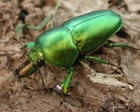
Graham Readfearn Environment and climate correspondentWed 27 May 2026 05.35 EDTLast modified on Wed 27 May 2026 05.36 EDTSharePrefer the Guardian on GoogleIn the summer months, Lord Howe Island’s unique stag beetle, with wing cases that appear forged from iridescent green metal, fly around the ancient tree tops looking for a mate.
“That’s really something wonderful,” said Ian Hutton, a naturalist and nature guide on the World Heritage-listed island.
“I would have struggled to have seen any of them 10 years ago.”
Lord Howe Island, which lies 600km off Australia’s east coast, was formed by the 7-million-year-old remains of a volcano. Its craggy and beautiful 15 sq km are crammed with a treasure trove of unique plants and animals. And, in recent years, a lot more bugs.
The rise in the island’s invertebrates – beetles, weevils, bush cockroaches and other bugs – has come after a campaign seven years ago to rid the island of about 300,000 invasive rats and mice.
Lord Howe Island lies 600km off Australia’s New South Wales coast. Photograph: Blake Sharp-Wiggins/The GuardianNow a study in the journal Biological Invasions has found the island’s bugs are bouncing back since the 2019 eradication program.
“Across our sites we found a 60% increase in the total numbers of invertebrates,” said Maxim Adams, a researcher at the University of Sydney.
“I think that’s pretty extraordinary but it’s something we had a feeling for. Walking around Lord Howe now … all of us are blown away by what we’re seeing.”
Mice arrived on the island in the mid-19th century and then, in 1918, a supply ship grounded on a rock.
Scientists to track 10,000 moths across Australia, using little more than eyelash glue and confetti-like tagsRead moreStowaway rats jumped ship and ate their way through the island’s native flora and fauna – helping push five bird species, two plants and at least 13 species of invertebrates to extinction.
Before the 2019 program was rolled out, scientists had the foresight to measure the numbers and types of bugs on the island. That has allowed Adams and colleagues to measure the change.
Using traps and also “cockroach hotels” – layers of cardboard that mimic the bark the crawlies find hard to resist – the university team and the NSW government collected more than 24,000 invertebrate specimens from 20 sites in and around the island’s subtropical forests.
The Lord Howe Island cockroach Panesthia lata was once thought extinct, but has rebounded after rodent eradication. Photograph: Justin GilliganAs a place to work, Adams said, it is remarkable.
“The place feels ancient. It’s at this confluence of tropical currents from Queensland and the cooler temperate New South Wales. It’s a weird, otherworldly place and it feels like Jurassic Park.”
Lord Howe has more than 1,600 different known invertebrate species and about half are known nowhere else on Earth. For a scientist, it’s a world of discovery.
“You turn over a rock and everything is different,” Adams said.
Because Lord Howe has no native mammals, the island’s food web is unusual. Bugs would often be eaten by small mammals but, now the invaders have gone, birds and reptiles are thriving.
“The rodents will have been eating anything they could get and really anything above 1cm they will eat pretty indiscriminately,” Adams said.
Prof Nathan Lo, from the university’s Molecular Ecology, Evolution and Phylogenomics laboratory, said: “Rodents didn’t just affect a few iconic species, they reshaped ecological relationships across the island.
“What we’re seeing now is evidence of an ecosystem beginning to reorganise itself after that pressure was removed.”
Maxim Edwards, right, and Nicholas Carlile hunt for the critically endangered cockroach Panesthia lata on Lord Howe Island. Photograph: Justin GilliganAdams thinks the study has recorded only the beginning of the bounce back of the island’s bugs.
“Seeing these changes after only five years is especially promising,” he said. But a long-term effect on ecological processes like predator numbers can take decades to manifest.
“Almost every part of the ecosystem is going to benefit. We expect to see more birds, more geckos, more skinks and improved plant and soil health.”
Numbers of the island’s unique ground-nesting woodhen are on the rise, said Hutton, as are most other birds.
“The forest understorey is re-growing – the rats and mice had been eating all the seeds.
“The understorey was gone but now we see hundreds of seedlings coming up. With more invertebrates, that’s all food for the geckos and birds.”
A couple of years ago, while on a camping trip on one of Lord Howe’s peaks, Hutton went out collecting bugs one night. Among the specimens he collected was a weevil species that, until then, was thought to have been extinct and hadn’t been seen for more than 100 years.
“It had survived and now it’s breeding again and being rediscovered,” he said.
“I go out with tourists on walks at night and we find these really striking beetles and snails. Wonderful.”
Explore more on these topicsShareReuse this contentA magpie can recognise you – and four other fun facts about Australia’s most often-spotted bird
2d ago…… commentsEndangered sawfish at risk from plan to double water extraction from WA’s Fitzroy River, advocates say
4d ago…… commentsFeral horse numbers surge in Kosciuszko national park after pause in aerial culling, survey shows
6d agoOne Nation says it’s the only party in Australia to question climate science. It should ask itself why
6d ago…… commentsMouse plague hits WA grain farmers as numbers surge in SA: ‘You literally can’t get away from them’
22 Apr 2026Twenty-two years and 15,000km later: fluke discovery sets new record for humpback whale journey
19 May 2026‘They poo all over the yard’: little corellas are terrorising Kangaroo Island – and nothing can stop them
9 Apr 2026…… commentsAustralia’s ‘green Wall Street’ is failing to launch. Threatened species deserve better than the nature repair market
18 May 2026…… comments‘Harrowing’: Cyclone Narelle leaves graveyard of turtles, dolphins and seabirds in Western Australia
1 Apr 2026‘Disastrous’ plan to allow fracking on South Australia’s Limestone Coast is a broken promise, locals say
17 May 2026