Scientists developing vaccines and anti-tick treatments amid growing concern over spread of disease
Nicola Davis Science correspondentThu 21 May 2026 05.13 EDTLast modified on Thu 21 May 2026 05.19 EDTSharePrefer the Guardian on GoogleCases of Lyme disease have risen more than 20% in England in the past year, public health experts have revealed, as pharmaceutical companies work to create new vaccines and drugs to tackle the tick-borne illness.
According to data from the UK Health Security Agency (UKHSA), published as part of its One Health vector-borne disease surveillance report, there were 1,168 laboratory-confirmed cases of Lyme disease in 2025, up from 959 in 2024 – an increase of 22%. However, the figure is similar to that recorded in 2023, when there were 1,151 confirmed cases.
Two probable cases of tick-borne encephalitis complex were also identified in 2025, bringing the total number of locally acquired cases to six since 2019, when the virus was first identified in the UK.
Dr Claire Gordon, the head of the rare and imported pathogens laboratory at UKHSA, said: “While the number of laboratory-confirmed acute cases of Lyme disease in 2025 is an increase on numbers reported in 2024, we expect overall case rates to vary year to year depending on awareness, testing rates and factors that impact outdoor activities such as weather. Broader trends in 2025 remain consistent.”
Lyme disease is caused by a type of bacteria called Borrelia burgdorferi, which lives in the gut of ticks – tiny spider-like creatures found in grassy and wooded areas that feed on the blood of birds and mammals, including humans.
“In recent years, we have seen an increasing geographical distribution of ticks across the UK,” Gordon said. “But tick numbers continue to vary due to changes in weather conditions, climate trends, habitat changes and shifting host populations.”
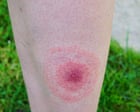
Symptoms of Lyme can include a bullseye-like rash, fever, muscle and joint pain, and lethargy. Left untreated, the condition can become chronic and, even among those who receive antibiotics, some report ongoing symptoms.
Not all ticks carry Lyme bacteria, and it is thought rapid removal of ticks reduces the risk of infection after a bite. But while there are various medications available to protect pets from Lyme disease – including monthly oral tablets and vaccinations – advice for humans centres on prevention, such as using repellants, covering exposed skin outdoors and wearing light-coloured clothing to make ticks easier to spot.
Linden Hu, a professor of immunology at Tufts medical school, said there were a number of reasons veterinary and human approaches differed, noting that pet owners were often more willing to medicate their dogs than themselves or family members, while clinical trials in humans were harder to conduct.
“It’s easier to do studies in animals because you can control the situation. You can put infected ticks on them to test if it’s going to work, which you really can’t do with humans,” he said, adding real-world studies, or “field trials”, were expensive and risky, given that it was unclear how many cases of Lyme would occur.
A vaccine against Lyme for humans, known as LYMErix, was previously available in the US, with trials suggesting it had an efficacy of 76% after a third dose. However, it was withdrawn from the market in 2002 after poor uptake.
“There were a couple of things that coalesced to cause the low sales,” Hu said, noting this included the US Centers for Disease Control and Prevention recommending it only for people at high risk of Lyme disease. There were also concerns the vaccine may be linked to arthritis. While evidence remained lacking, the negative media coverage and lack of trust in the vaccine contributed to low demand.
Several new treatments are in the works, including an mRNA vaccine from Moderna – a jab Hu has worked on that is in phase 2 of its clinical development – as well as a different vaccine from Pfizer and Valneva.
Crucially, Hu said, both approaches aimed to avoid activating the immune pathway some researchers suspected caused arthritis in certain recipients of LYMErix.
Not that it has been plain sailing. In the case of the Pfizer/Valneva vaccine, there were fewer-than-expected cases of Lyme among participants in a phase 3 trial, meaning that while the vaccine appeared to have an efficacy of more than 70%, the results were not as statistically robust as hoped. Despite this, the vaccine is to be submitted to regulatory authorities.
Other approaches are also being explored. Among them is monoclonal antibody from Tonix Pharmaceuticals that could be given before exposure to ticks, while Hu is working on a drug with Tarsus Pharmaceuticals that is already used to protect dogs and cats. Unlike the vaccines, this drug – known as lotilaner – kills the ticks, rather than the bacteria they carry.
According to Hu, lotilaner works rapidly by killing the ticks before they have a chance to transmit Lyme or, potentially, other diseases.
Julia Knight, of the charity Lyme Disease UK, said it was unclear whether a vaccine would be adopted in the UK, given that figures for Lyme disease appeared to be low, although were likely higher – not least because they do not include the roughly 70% of people with Lyme who develop the telltale rash, as these patients are treated immediately without laboratory tests, and Lyme disease can be missed or misdiagnosed.
“Obviously any advances in science that prevents Lyme disease is always welcome, but whether people will welcome a vaccine or not in the current climate of vaccine hesitancy remains to be seen,” she said.
Explore more on these topics- Lyme disease
- Medical research
- Health
- Vaccines and immunisation
- England
- Infectious diseases
- Microbiology
- news
Arts and cultural engagement ‘linked to slower pace of biological ageing’
11 May 2026New drug may extend survival in aggressive ovarian cancer, trial shows
10 Apr 2026Woman with three deadly diseases has ‘remarkable’ recovery after cell therapy
9 Apr 2026NHS trialling rapid blood test to help diagnose sepsis and meningitis in children
27 Oct 2025Antidepressants differ in side-effects such as weight gain, UK research finds
22 Oct 2025‘Exciting’ clinical results offer hope for new class of MS therapies
26 Sept 2025UK universities cut back on crucial research because of reduced funding
12 Sept 2025US drugmaker Merck scraps £1bn London research centre and cuts 125 science jobs
10 Sept 2025Set a two TikTok toilet limit to reduce haemorrhoid risk, doctors advise
3 Sept 2025Test developed to identify women at increased risk of miscarriage
26 Jun 2025