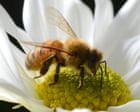
An estimated 800,000 bees, worth tens of thousands of dollars, have been stolen from properties in far north Queensland.
The industry is already reeling from the this month’s arrival of the varroa mite parasite.
Tom Bidner, an apiarist from the Atherton Tablelands, west of Cairns, said 44 colonies had been stolen from three different beekeepers.
“This isn’t over yet,” he said. “We’ve got so many colonies to get through. We’re still getting around and checking all our different sites.”
He estimated that each hive contained at least 20,000 bees, making it a total of more than 800,000.
The alleged thefts happened on multiple different properties in different areas and required a sophisticated operation and specialist equipment.
Police search for thieves who allegedly stole $150,000 worth of beehives from rural NSW property Read moreRather than risking early detection by stealing an entire box, they took out what’s known as the brood box. That means the hive appears unchanged from afar.
“They’re rocking up with a truckload of gear, basically, and they’re transferring our frames into their boxes … and putting our hives back together, so it doesn’t sort of alert any of the growers that it looks like someone’s been in and done such a thing,” Bidner said.
The thieves also didn’t take any honey, which was left on the hive.
He suspects that the culprits are probably people from within the industry.
Sign up for the Breaking News Australia emailThe apiarists will lose not just the stolen insects but the value of the pollination contracts, which can run into the thousands of dollars, he said. The grower will also lose out due to lower quality flowering.
Bidner said it was the biggest theft in memory, though far from the first.
It’s now the peak of the avocado season in far north Queensland, so hives are deployed at properties across the area on contracted pollination work for local growers. Others are just left on the side of the highway.
“Security wise, in the past, we’ve let the bees do the majority of the job … from time to time, it definitely happens you’ll have someone try and come and tamper with a hive,” he said. “They usually get about 30 seconds into the job and they’re gone.”
skip past newsletter promotionFree newsletter |When neededSign up to Breaking News Australia
Get the most important news as it breaks
after newsletter promotion
Det Sgt Ben Cross from the Mareeba rural and stock crime squad told the ABC he also believed the culprit to be a “commercial farmer” rather than a hobbyist.
Meanwhile, the far north Queensland region recorded its first detection of the varroa mite just a week ago south of Cairns.
Megan O’Mara, a professor at the University of Queensland, said more than $100m had been spent preventing the spread of the parasite since it arrived in Newcastle in 2022 but available treatments were of limited effectiveness.
The cost to the industry of uncontrolled spread is estimated at as much as $1bn over 30 years. Australia officially gave up eradicating the parasite in 2023.
O’Mara is part of an international effort to develop a more effective treatment. One of the leading candidates uses MRNA technology originally pioneered during the Covid-19 pandemic.
“I‘d love to say it’s around the corner. Yeah, it’s it’s a few years off, but we’re making progress,” she said.
Bidner said the thefts and the parasite were a “double whammy”.
Far north Queensland was unusually exposed, he said, because the hot weather meant bees brood all year. The parasite reproduced in the brood. That meant they would always have to be on the lookout.
“We haven’t detected mites in our colonies yet but we should be putting our time and energy into that,” he said. “And instead, we’ve had this spate of theft.”
