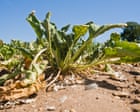
Keys crops such as cereals, potatoes, sugar and oils grown in areas with moderate to very high risk
Joanna PartridgeSun 27 Sep 2026 12.24 EDTLast modified on Sun 27 Sep 2026 12.55 EDTSharePrefer the Guardian on GoogleThe vast majority of the UK’s essential foods, including cereals, potatoes, sugar and oil, are grown in areas of England rated as having a moderate to very high risk of drought.
A very high proportion – 81% – of England’s fresh produce is concentrated in parts of the country that are already experiencing water stress, according to the analysis by the nature-focused investment fund Rebalance Earth.
Three-quarters of England’s wheat (77%), barley (75%) and oilseed rape (74%) grow in parts of the country rated as being at a moderate to very high drought risk, along with 70% of sugar beet and 67% of potatoes, it found.
Dying and undernourished sugar beet in drought-affected fields in Suffolk, England. Photograph: Si Barber/The GuardianIt said about a quarter of the country’s staple crops were grown in areas facing an acute risk of drought, including 30% of wheat and barley, 28% of oilseed rape, 27% of fresh produce and 21% of potatoes.
“Drought builds slowly and quietly, and rarely gets the same attention as flooding, but its impact runs right through the economy: lower yields, strained supply chains and higher prices in all of our shopping baskets,” said Kirsty Wilman, the fund’s chief operating and financial officer.
Some of England’s traditionally most productive agricultural areas – such as East Anglia, long known as the country’s breadbasket, and Kent, often described as the garden of England – are among those facing the greatest pressure from drought and have seen prolonged periods of dry weather in recent years.
The yield from this year’s cereals harvest in England and Wales was described as disappointing in the final 2026 harvest report from the Agriculture and Horticulture Development Board (AHDB), with volumes of wheat, spring barley and oats below historical averages across the UK.
Andrew Blenkiron, managing director of the Elveden estate in Suffolk, next to a new reservoir called Summerpit. Photograph: Andrew BlenkironCrop yields are also significantly lower than normal on the Elveden estate in Suffolk, which is owned by the Guinness family and includes 9,000 hectares (22,000 acres) of farmed land.
skip past newsletter promotionFree newsletter |Every weekdaySign up to Business Today
Get set for the working day – we'll point you to all the business news and analysis you need every morning
after newsletter promotion
“For three years out of five we have been in drought conditions,” said Andrew Blenkiron, who manages the farms on the estate in Breckland, an area on the Suffolk-Norfolk border known for its sandy soil. One of England’s largest commercial farms, they grow cereals including wheat and barley and root crops including onions and potatoes.
“Water for food is key for us to function as a business and make sure we produce 100,000 tonnes of food here on an annual basis,” he added.
Despite the challenges, Blenkiron believes the UK needs to better use its water resources to continue growing staple foods in productive areas. “If we didn’t grow on this land that is totally suitable for it, we would just import more and let other people deplete their natural resources.”
Explore more on these topicsShareReuse this contentUK food and drink trade deficit largest since 2000 at £21bn
3d agoDeadly escalation in Black Sea attacks prompts fears of even higher food prices
4 Sept 2026Extra fishy: your tinned mackerel may not be what you think it is
11 Sept 2026Grinding up fish to feed to fish is ‘absurd’: fears over UN aquaculture plan
3 Sept 2026‘The worst part is the guilt’: the owners who fear dog food caused pets’ eye problems
22 Aug 2026Bhutan hosts first ‘conscious food summit’ amid threats to global supplies
31 Aug 2026Global food prices at three-year high as heatwaves and wars push up crop costs
7 Aug 2026Diageo to nearly double Guinness production and cut jobs in turnaround plan
6 Aug 2026Fishy business: who really profits when sardines go viral? - video
25 Aug 2026Greggs sales jump as iced matcha lattes and chicken rolls become heatwave hits
29 Jul 2026