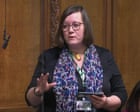
Labour MPs Gareth Snell and Meg Hillier say Lords must be allowed to fulfil duty in scrutinising bill on serious public issue
Jessica Elgot Deputy political editorThu 10 Sep 2026 09.11 EDTLast modified on Thu 10 Sep 2026 09.41 EDTSharePrefer the Guardian on GoogleMPs who voted for and against assisted dying have urged their respective sides not to take the “extraordinary risk” of forcing through the bill using an obscure parliamentary procedure if it continues to be blocked by the Lords.
Two Labour MPs have written a warning letter to colleagues in the crucial hours before the next vote on Friday: Gareth Snell, who voted in favour of the bill, and Meg Hillier, who voted against.
They said MPs were being presented with a “‘this or nothing’ ultimatum” and that invoking the Parliament Act to override the Lords would lead to “a constitutional showdown” with far-reaching consequences.
“Our primacy as the elected house is more than a right to enforce our will; it is a responsibility to exercise our power with the greatest of care,” Snell and Hillier wrote.
The assisted dying bill will return to the Commons on Friday as a private member’s bill after its previous version passed the House of Commons but was talked out by a handful of peers. Despite days of debate from peers, the bill fell because of the number of amendments tabled in the Lords.
The private member’s bill, originally sponsored by Kim Leadbeater, has been revived by the Labour MP Lauren Edwards. It had passed last year by a majority of 23 in the Commons. Supportive MPs and peers say they can use the 1911 Parliament Act to override the Lords and pass the bill should it be voted through again by the Commons.
But some MPs have expressed uneasiness at the use of the act to bypass the House of Lords on such a serious issue. The bill would allow adults with a terminal illness with less than six months to live to end their lives, after the approval of a panel of experts.
skip past newsletter promotionFree newsletter | Every weekdaySign up to First Edition
Our morning email breaks down the key stories of the day, telling you what’s happening and why it matters
after newsletter promotion
Tuesday briefing: Can a deeply divided UK agree on an assisted dying bill?Read moreSince 1949, when it was revised, the Parliament Act has been used to enact just a handful of laws that have not had the consent of the Lords, including decriminalising homosexuality and banning fox hunting.
After a session of parliament ends, a bill must be reintroduced and passed again in the new session to trigger the act’s override mechanism. It must be exactly the same version of the bill as previously passed by the Commons.
In their letter to MPs, Snell and Hillier said the determination of the bill’s backers to use the Parliament Act meant there would be no possibility of “practical or worthwhile amendments” being added, despite concerns from hospices, medical professionals, legal bodies and others.
“This is an extraordinary risk for us to take,” they wrote. “We know that the colleagues who have brought the bill forward did so in good faith. They have sought to start a conversation many feel is overdue about an issue that is manifestly of interest to the public.
“However, the consequences of what may happen this week go much further. We both want the House of Lords to fulfil its duties, but bringing back an identical bill devoid of the previously agreed amendments sets up a constitutional showdown through an issue which deserves much more thoughtful consideration.”
Supporters of the bill have argued that peers can in fact amend the bill if they then allow it to proceed to a vote in the usual way.
Previously, a small number of peers who opposed the bill prevented the House of Lords from even reaching an opportunity to vote on the bill by submitting more than 1,000 amendments, meaning it ran out of time for debate before the end of the parliamentary sessions, which causes a bill to automatically fall.
Explore more on these topicsShareReuse this contentLow turnout threatens Commons vote on assisted dying, say MPs
2d agoAndy Burnham says he will not vote on assisted dying bill to avoid swaying debate
28 Aug 2026France’s ‘aid in dying’ law comes into effect after constitutional approval
19 Aug 2026We must fix social care before allowing assisted dying, says Burnham
29 Jul 2026MPs who backed assisted dying bill don’t expect it to return via act that bypasses Lords
3 Jun 2026Assisted dying bill could return after ballot for private member’s bills
21 May 2026Former minister with terminal cancer urges MPs not to bring back assisted dying bill
20 May 2026MPs vow to bring back assisted dying bill after ‘undemocratic’ Lords block
24 Apr 2026House of Lords has ‘signed its own death warrant’ by stalling assisted dying bill, says MP
20 Mar 2026Supporters of Scotland’s assisted dying bill frustrated by lack of backing from Labour MSPs
18 Mar 2026