Exclusive: People from deprived and minority ethnic backgrounds have better access to device than for previous technologies
Tobi Thomas Health and inequalities correspondent Tue 19 May 2026 03.00 EDTSharePrefer the Guardian on GoogleThe rollout of a “life-changing” artificial pancreas on the NHS for people with type 1 diabetes has helped to narrow ethnic and socioeconomic inequality within access to treatment, according to figures.
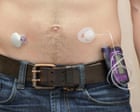
Officially known as a hybrid closed-loop system, an artificial pancreas comprises three interconnected parts: a sensor worn on the body called a continuous glucose monitor; an algorithm either built into the pump or on a separate device such as a phone that calculates the precise dose of insulin needed; and an insulin pump that delivers the dose into the bloodstream.
For patients, the device removes much of the mental burden of managing blood sugar levels, especially around mealtimes and during the night. According to previous clinical trials, the device is more effective at managing diabetes than current diabetes technology, such as using continuous glucose monitors alone.
Previous rollouts of diabetes technology have had stark disparities in uptake regarding ethnicity and deprivation. Studies have shown that people from minority ethnic backgrounds in England are less likely to have access to continuous glucose monitors, while people from deprived backgrounds have been unable to have full use of this tech.
However, the first two years of the artificial pancreas rollout has been seen to reverse this trend, with only a 3% difference in uptake between people from the most and least deprived backgrounds, as well as those from minority ethnic backgrounds compared with white counterparts.
Naiha Shafiq, 27, from London, was fitted with an artificial pancreas three years ago. She said the device had been “life-changing” because she was previously in and out of hospital with diabetic ketoacidosis, a life-threatening complication, as a result of struggling to administer her insulin injections.
“There was a time I would be in hospital every three to five days,” Shafiq said. “When I fell pregnant, I knew something had to change for me for the sake of my son. That’s when the team introduced me to the pump. I was very hesitant at first but once I got started, I loved it.”
For Shafiq, administering her insulin was previously made more difficult due to her religious beliefs. “As a Muslim woman who wears hijab it was extremely difficult for me to be on injections as I would always look for somewhere private to inject most times, and if there was nowhere private to inject I would miss injections because I wasn’t comfortable. The pump makes life now so much easier.”
In 2023, the NHS said more than 150,000 adults and children with type 1 diabetes would be offered the device. The first two years since launch have focused on children, and about 32,000 of them have been fitted with the device on the NHS, making up 72.3% of those eligible. The programme will continue for the next few years until all eligible children and adults with type 1 diabetes have received the device.
Helen Kirrane, the head of policy and campaigns at Diabetes UK, said the device had made a “significant, life-changing difference for many thousands of people living with type 1 diabetes”.
“We’re incredibly proud of the role Diabetes UK research and advocacy has played in getting us to this point, where a world-leading rollout is taking place on the NHS with equity at its very core,” Kirrane said. “But it is clear there is more work to be done and, with some people still missing out on this transformative technology, the challenge now is ensuring that everyone who is eligible can access it across the UK, regardless of their background or where they live.”
Hilary Nathan, the director of policy at the research and advocacy organisation Breakthrough T1D, said: “The UK is rightly being recognised as a global leader in the rollout of hybrid closed-loop systems for people living with type 1 diabetes, reflecting years of research, advocacy and leadership from people with lived experience.
“The priority now is to ensure equitable access across all four nations of the UK, so that everyone has a genuine choice of the technology that suits them when they need it and so the benefits of innovation are felt fairly across every community, with no one left behind.”
Dr Clare Hambling, National Clinical Director for diabetes and obesity, said: “It is fantastic to see that the world-first rollout of this ground-breaking technology is already transforming the lives of tens of thousands of children and young people living with type 1 diabetes on the NHS.
“These revolutionary devices have a represented a real step-change in care for so many families and this progress is testament to the dedication of our paediatric diabetes teams across the country to ensure as many young people who need them have been able to access them as quickly as possible, no matter where they live.”
Explore more on these topicsShareReuse this contentMinority ethnic heart failure patients ‘36% more likely to die’ in UK
2 Jun 2024Hundreds of weight loss and diabetes jab users report pancreas problems
25 Jun 2025New scheme offers diabetes-friendly twists on African-Caribbean meals
28 Jan 2025Public health expert lambasts UK government as fund to tackle inequality launches
14 May 2024Study links bananas, oats and yoghurt to greater diabetes risk in susceptible children
8 Sept 2024Women live more years in ill-health than men, finds gender health gap study
1 May 2024NHS ‘soup and shake’ diet puts almost a third of type 2 diabetes cases in remission
5 Aug 2024Black children suffer ‘more complications’ after appendicitis surgery
22 Feb 2024Insulin shortages ‘causing stress and anxiety’ for UK diabetes patients
28 Apr 2024Areas of England with poorest health have higher rates of poverty, report finds
18 Jan 2024
