Nigeria has become the latest African state to repatriate some of its citizens from South Africa following a rise in anti-migrant sentiments in the country.
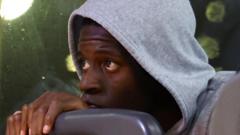
A flight carrying 268 Nigerians has landed in Lagos after leaving Johannesburg on Thursday morning. The passengers were part of around 1,000 people who the Nigerian consulate in South Africa says have registered to be repatriated.
Ghana, Zimbabwe and Malawi have already carried out evacuations, ahead of a 30 June deadline set by some campaigners for undocumented migrants to leave.
Many people from other parts of Africa moved to South Africa around the time white-minority rule ended in 1994, hoping for a better life.
But with South Africa facing an unemployment rate of more than 30%, anti-migrant sentiments have risen, with protest marches being held in major cities and people facing xenophobic attacks.
At the main international airport in Johannesburg, Justin, one of the Nigerian passengers, told the BBC that he had lived in South Africa since 1998.
"I'm leaving because of the conditions they've given us here. They say we must leave on or before 30th June. And because of the way they are killing people, killing our brothers, so I'm not safe," Justin said.
Justin told the BBC that he had already been targeted.
"Recently they attacked me in a taxi. I ran away and left my things. I left my phone and everything.
"They call us names and say you must leave this country. When we tried to beg them, they started insulting us."
After landing in Lagos, hairdresser and mother-of-three Chinwe Osuala said she had experienced violence during an earlier wave of anti-migrant attacks.
"I was personally attacked in my business premises. But after everything I called the police. Police helped me."
She said the attack left her deeply concerned about her family's future.
"You can't even walk around freely. You'll be scared, the children are scared that's the main reason I came back, because of the children"
Despite her decision to leave, she said she would miss many of the friends she had made in South Africa.
"Most of them, they were crying because I was leaving. When you talk about South Africans not all of them are xenophobic there are people who love you deeply, genuinely."
The head of Nigeria's Diaspora Commission, Abike Dabiri-Erewa, told the BBC that the country's emergency management agency would transport returnees to destinations across Nigeria's 36 states.
She said they had received financial assistance of more than 100,000 naira ($73; £55), along with mobile phone credit.
There have been no official figures regarding the number of deaths in South Africa caused by xenophobic violence in recent weeks.
The police have said two Mozambican men were killed in Western Cape province earlier this month but have not given a motive.
The Mozambican authorities said the death toll was higher, and their citizens have been killed as a result of xenophobia.
'We have to prioritise South Africans': Anti-migrant movement blocks foreigners from healthcare
Some of the protesters have pointed the finger at migrants for South Africa's high unemployment rate, and putting pressure on public services like schools and hospitals.
However, Nigeria's Consul General in South Africa, Ninikanwa Okey-Uche, told the BBC that migrants made up less than 10% of South Africa's population, and could not be "blamed for broken systems in education, health care, policing, unemployment".
"They are not and cannot be the problem. So, migrants are basically being scapegoated," Okey-Uche added.
A spokesman for South Africa's Border Management Agency told local TV station Newzroom Afrika that none of the passengers on the flight had documents to live in South Africa legally.
Okey-Uche said she did not have the figures, but delays in processing applications could lead to some people ending up as undocumented migrants.
She added that the South African authorities need to do more to act against people "propagating these xenophobic attacks and anti-foreigner sentiments".
"There are a lot of top South African politicians who have spoken up against what's happening, saying it's absolutely wrong.
"But down on the street, we need to see arrests. We know the people in charge. They're not hiding. They've caused mayhem in people's lives, but they're walking free. Some of them are running for election," Okey-Uche said.
South Africa is due to hold local government elections in November, with some analysts believing that migration is being turned into a major campaign issue.
On Sunday, President Cyril Ramaphosa made a televised address responding to the protests, announcing new measures to crackdown on illegal migration.
These include jailing employers who hire undocumented workers, setting up dedicated courts to speed up the deportations and having a biometric database for everyone in the country to avoid identity theft.
He also warned South Africans not to take the law into their own hands by targeting those they suspect of being in the country illegally.
You may also be interested in:
Malawians repatriated from South Africa amid xenophobia concerns
South Africa police investigate killing of two Mozambican men
The king's speech - and why it has foreigners in South Africa worried
Getty Images/BBCGo to BBCAfrica.com for more news from the African continent.
Follow us on Twitter @BBCAfrica, on Facebook at BBC Africa or on Instagram at bbcafrica
BBC Africa podcasts