If you get Global News from Instagram or Facebook - that will be changing. Find out how you can still connect with us.
2:08 ‘Adopt-A-Bat’ initiative teaches Maritimers about rare microbat species 'Adopt-A-Bat' initiative teaches Maritimers about rare microbat speciesA Nova Scotia non-profit is asking people to “adopt” a bat in a bid to educate Maritimers about a rare species, while supporting bat conservation.
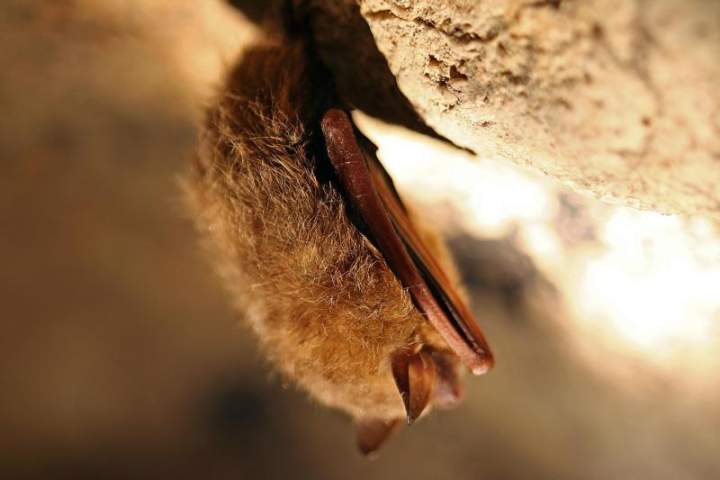
The Nature Trust of Nova Scotia has launched the Adopt a Tri-coloured Bat initiative, in support of one of the smallest bat species in North America.
The winged mammals only weigh about the weight of a Toonie but play a big role in the region’s ecosystems.
“They’re a keystone species,” said Lucas Greville, a Mount Allison University professor and bat researcher.
“They’re going to be eating and taking care of a lot of moths, beetles, general pests. So they’re something we really want to have around.”
Maritime bat populations were devastated by white-nose syndrome in the early 2010s. The white fungus grows on the bats’ muzzles, wings, and ears during hibernation. The syndrome constantly wakes bats up during hibernation and depletes their resources.
It’s estimated that the populations of all six native species declined by upwards of 95 per cent.
Get daily National news
Get daily Canada news delivered to your inbox so you'll never miss the day's top stories. By providing your email address, you have read and agree to Global News' Terms and Conditions and Privacy Policy.“We’re talking thousands of bats just lying dead in their hibernation sites. Since then, we’ve started to see a slow incline over the last handful of years, specifically of the little brown bats,” said Greville.
“There’s likely some genetic resilience that the individuals who are surviving white-nose now display, as all bats that are surviving today have experienced this fungus and disease in some capacity.”
On average, the bats give birth to two pups per litter, making repopulation a slow process.
“They’re a beautiful part of nature and as bat biologists, we often say the scariest part about a bat is a world without them,” said Greville.
- Kelowna-area candidates make final push before election day
- ‘He ran into the fire’: Military medic critically injured saving fellow soldiers in CFB Wainwright fire
- Canadian woman dies in U.S. over fear of crossing through B.C. for medical care
- WATCH: Global Okanagan News at 5:30 p.m. – Oct. 23
Jaimee Morozoff, the Nova Scotia Nature Trust’s director of conservation, says money raised in their Adopt a Tri-coloured Bat initiative will go directly toward land stewardship and habitat protection.
“They are unique to Nova Scotia in the way that they are roosting with the Old Man’s Beard (lichen), which is, you know, a really charismatic, typical Nova Scotia forest indicator,” said Morozoff.
“It’s really critical that we’re able to protect the places where those remaining bats are still roosting and surviving.”
The initiative is part of the trust’s annual Gifts of Nature program. Donors will receive exclusive artwork and a personalized “adoption certificate.”
“Last year, we redesigned the full program with the Nova Scotia lettering and mural artist named Kristen DePalma. This is a really nice way to support that collaboration, support a local artist, and also help conservation at the same time,” said the trust’s communications manager, Anna Weinstein.
As part of conservation efforts, bat sightings can be reported online at batconservation.ca or by calling the Atlantic Bat Hotline at 1-833-434-2287 (BATS).
Add Global News as a Preferred Source on Google to see more of our stories in your search results.
Journalistic standards Report an error © 2026 Global News, a division of Corus Entertainment Inc.