Forced closure marks low point in UK-Israeli relations, with reports UK is considering retaliatory expulsion of Israeli diplomats from London
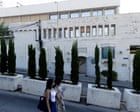
William Christou and Sufian Taha in JerusalemWed 7 Oct 2026 11.14 EDTFirst published on Wed 7 Oct 2026 10.00 EDTSharePrefer the Guardian on GoogleThe UK consulate in East Jerusalem gave few signs it was at the centre of a geopolitical controversy this week, with little movement around the high-walled building save the fluttering of the union jack and the occasional car exiting the compound.
The mission is to shut its doors on Thursday after Israel ordered its closure in response to a UK ban on trade with illegal settlements in the occupied West Bank and sanctions on those who help build or finance them.
The forced closure marked the lowest point in UK-Israeli relations for decades, with reports of the UK considering a retaliatory expulsion of 27 Israeli diplomats from London.
It would be the Palestinians who pay the price for the consulate’s closing, warned Amjad Iraqi, the International Crisis Group’s senior analyst on Israel and Palestine. The UK consulate in East Jerusalem is separate from the UK embassy in Tel Aviv – which remains open – and provides services to Palestinians in East Jerusalem, the West Bank and Gaza, services they will now lose.
“It’s quite telling that the Israeli government response was primarily about blocking the UK’s ability to support Palestinians, rather than the core of UK-Israeli relations themselves,” Iraqi said. “For [the Israeli] foreign minister, Gideon Sa’ar, the response is low-cost, in their minds it’s just Palestinians bearing the cost.”
UK threatens to expel Israeli diplomats over planned East Jerusalem consulate closureRead moreIsrael has already curtailed the diplomatic activities of the Netherlands, Spain and Norway in the occupied West Bank.
Palestinian residents of Sheikh Jarrah, the East Jerusalem neighbourhood that is home to the consulate, appeared resigned when asked about the impact the closure might have on their lives.
“I mean, it was the British that were the basis of the issue, wasn’t it? They were the ones who signed the Balfour declaration?” said Abu Abdo, a 79-year-old former repairman and resident of Sheikh Jarrah, referring to a 1917 document by the British foreign secretary Arthur Balfour, which expressed support for a Jewish state in Palestine.
It was a dramatic end for the consulate’s tenure in East Jerusalem, which since its move to the Sheikh Jarrah neighbourhood in 1967 has experienced its fair share of political upheaval.
The UK government first bought the plot that would become its consulate in 1963, when East Jerusalem was still under Jordanian control. It was meant to be a direct liaison between the UK government and the Jordanian-administered West Bank and East Jerusalem. The compound took four years to build and was finally ready for the UK consul-general to move into by 1967.
By the time the new consul-general moved into the premises, however, East Jerusalem was no longer under the control of the Jordanians. Just weeks before John Henry Lewen was to move into the building, the six-day war broke out and Israel captured East Jerusalem from the Jordanian forces.
Lewen assumed his post at the consulate in a changed East Jerusalem under Israeli control. The consulate he oversaw occupied a unique position as the UK did not recognise Jerusalem as being under any single country’s control.
As the UK foreign secretary told parliament in June 1967: “Our consul-general in Jerusalem is subordinate neither to the ambassador in Tel Aviv nor to the ambassador in Amman, but directly to the Foreign Office.”
Lewen’s tenure was marked by the political problems that plagued Jerusalem in the aftermath of the six-day war and the birth of Israel. In 1969, a bomb was placed under the window of a consul secretary, harming no one but damaging the compound.
Years later, Palestinians would present their grievances to the British consulate in Sheikh Jarrah. In 2017, protesters demonstrated outside the consulate to mark the centenary of the Balfour declaration. Men placed flags in the consululate windows reading “Balfour is a crime”, while schoolgirls carried thousands of letters written by Palestinian students asking Britain to apologise for the declaration.
This week, however, there was little sign of the political turmoil which the British consulate had waded through during its 60 years on the site. The neighbourhood, mostly made up of diplomatic missions and UN and other international organisations’ offices, was quiet.
Residents in the area expressed disappointment over what they saw as a lack of international support for the Palestinian people in recent years.
“We have seen very little but studies and words, no action from the international community,” said Abu Abdo.
Explore more on these topicsShareReuse this contentIsraeli forces overwhelmed by violent settlers in ‘terrorist attack’ on Palestinian family
30 Sept 2026UN adds 61 firms to settlements blacklist over alleged human rights violations against Palestinians
26 Sept 2026Senior UK rabbis come out in support of sanctions on Israeli settlements
9 Sept 2026Miliband rejects chief rabbi’s claim that West Bank sanctions put UK Jews at risk
9 Sept 2026Will UK sanctions have any impact on Israel’s ‘settler terrorists’ in West Bank?
8 Sept 2026Ed Miliband has overturned decades of Foreign Office inertia on illegal Israeli settlements
8 Sept 2026Israel to close British consulate in Jerusalem after sanctions announced
8 Sept 2026UK accuses Israeli ‘terrorists’ of ethnic cleansing in West Bank with government backing
8 Sept 2026