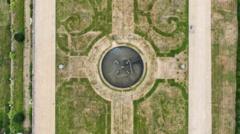
The prolonged dry weather has scorched the grass at Chatsworth, and uncovered the outline of a garden designed in 1699
BySamantha NobleEast Midlands- Published45 minutes ago
The recent high temperatures have revealed the outline of an ornate and "lost" 17th Century garden at the Chatsworth Estate.
The Great Parterre, which is beneath the south lawn at Chatsworth House in Derbyshire, was designed in 1699 for the 1st Duke of Devonshire, to complement the newly completed south facade of the house.
This is not the first time the European-style formal garden has been exposed due to the hot and dry weather - it was also revealed during dry spells in 2022 and 2018.
A spokesperson for the estate said after temperatures exceeded 30C in May, June and July, and with the "exceptionally dry" start to July, the lawn was "parched enough for history to reveal itself once again".
Image source, Chatsworth HouseImage caption,The Great Parterre measured 473ft (144m) by 227ft (69m), and followed the fashion at the time for formal gardens
The spokesperson added the intricate flower beds and pathways of the Great Parterre disappeared beneath a new landscape in the 1730s in changes introduced by William Cavendish, the third Duke of Devonshire.
"The grass that was laid to replace the flowerbeds and paths has shorter roots, so it burns more quickly when temperatures are high and dry, creating a contrast and temporarily revealing the swirling patterns of the first Duke's original garden underneath," they said.
Image source, Chatsworth HouseImage caption,This engraving of Chatsworth by Knyff and Kip, dated 1709, shows The Great Parterre
Get in touch
Tell us which stories we should cover in Derby
Contact formListen to BBC Radio Derby on Sounds and follow BBC Derby on Facebook, external, on X, external, or on Instagram, external. Send your story ideas to eastmidsnews@bbc.co.uk, external or via WhatsApp, external on 0808 100 2210.