Exclusive: Former Labor minister will lead the community-based investigation and report in October
Peter Garrett on why Australians deserve the truth about Aukus – Full Story podcast
Get our breaking news email, free app or daily news podcast
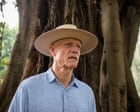
Former environment minister Peter Garrett will lead an independent inquiry into the Aukus defence pact, launched by a group of Labor veterans and public figures concerned proper scrutiny has never been applied to the $368bn defence plan.
Garrett, the Midnight Oil frontman and longtime environmental campaigner, will be the lead commissioner on the five-month community-based investigation, being launched on Tuesday.
It will hold public hearings and take written submissions before delivering a final report by 30 October.
Labor agreed to support the deal for Australia to acquire nuclear submarines in collaboration with the United States and the United Kingdom, negotiated under the former Morrison government and announced in 2021. As part of the agreement, Australia is funding upgrades to the US defence industrial base and will start receiving secondhand nuclear submarines in 2032.
Sign up for the Breaking News Australia emailThe UK parliament held a year-long review into the trilateral partnership and, after an inquiry by the Pentagon in 2025, US President Donald Trump agreed to support it.
But some within Labor, including former prime minister Paul Keating, as well as civil society groups believe Aukus is not in Australia’s best interest.
Garrett said the new inquiry – supported by trade unions and non-profit organisations – will consider if the subs can be delivered on time and on budget, how nuclear waste will be managed and if Australia’s defence and strategic interests are well served by the deal.
He has previously lashed Aukus, saying the plan “stinks” and represents “the most costly and risky action ever taken by any Australian government”.
“This inquiry is doing the job that a proper parliamentary inquiry should be doing,” Garrett told Guardian Australia.
“How is it that there’s been inquiries about the submarine program in other countries and we haven’t had a full parliamentary inquiry here?”
A group of commissioners will be named to lead the inquiry, convened under the auspices of the Australian Peace and Security Forum.
Critical to its deliberations will be the rise of China and the prospect of conflict in the Indo-Pacific region.
Nuclear non-proliferation issues, employment and environmental consequences are also among the inquiry’s terms-of-reference.
Despite the Albanese government expressing confidence since winning government in 2022, on Sunday the defence minister, Richard Marles, announced Australia would buy three secondhand American Virginia-class submarines, instead of at least one brand new vessel from the US.
Peter Garrett on why Australians deserve the truth about Aukus - podcastRead moreHe said the change – announced after talks between Marles and his US counterpart, Pete Hegseth, in Singapore – was about Australia placing “a premium on simplicity” and not about challenges in submarine production for the US navy.
Marles conceded there would be no “fundamental” shift in the cost but operating two models of the American-made submarines would be more costly and complicated.
The government’s preferred measure of the total cost is 0.15% of GDP over the lifetime of the deal.
The first Virginia-class nuclear sub from the US is due to arrive in Australia in 2032, with another arriving every four years, before the Australian-built model is ready for operations. The bespoke SSN Aukus model is due to come online in 2042.
Australia has not identified a permanent storage site for the nuclear waste generated by the submarine fleet, including the high-level radioactive waste from the reactor core and spent fuel, which will remain toxic for thousands of years.
In 2023, Marles committed to publicly outlining a process for identifying a waste site “within 12 months”. But no plan, or site, has yet been identified.
Starting as early as 2027, US and UK nuclear-powered submarines will begin rotations at HMAS Stirling in Western Australia. An east coast base is also expected to be built.
To cover capability gaps before the Aukus fleet arrives, Australia is extending use of 30-year-old Collins-class submarines for an extra 10 years.
As part of the second pillar of the agreement, Marles announced plans for the three countries to develop new weapons systems and sensors for underwater drones, to protect undersea cables, conduct surveillance and strike enemy targets.
Explore more on these topicsShareReuse this contentThis week could be a test for Labor – but only if the Coalition asks the right questions
8h agoAs Aukus spending and delays blow out, will Australia’s nuclear submarines ever materialise?
16 May 2026Soft toys, memes and a movie villain: Labor tries to simplify the message but selling a budget isn’t child’s play
5d ago…… commentsSecret documents reveal preferred Australian nuclear submarine base – and warn it could be a military target
15 May 2026As Australia becomes more integrated into the US military machine, can it avoid being dragged into war?
6 Mar 2026Labor is making a mockery of its promise of transparent government
25 May 2026Defence sources say Australian crew onboard US submarine that sank Iranian warship
5 Mar 2026Labor urged to use anti-corruption commission appointment to restore public confidence in watchdog
24 May 2026Aukus nuclear submarine base would ‘place a massive target on our backs’, NSW labour union warns
17 May 2026Australian troops safe after drone strikes air base near Dubai as Hastie says rules-based order a ‘fantasyland’
3 Mar 2026