Extreme heat accelerated disappearance of Triglav glacier from mountain revered as a symbol of Slovenian identity
Ajit Niranjan Europe environment correspondentTue 27 Oct 2026 13.08 EDTLast modified on Tue 27 Oct 2026 13.21 EDTSharePrefer the Guardian on GoogleThe final ice patch has vanished from Slovenia’s Triglav glacier, the latest Alpine casualty of Europe’s scorching summer.
The once mighty ice mass lost 93% of its surface area between 1983 and 2003, shrinking to cover less than a hectare of overheated rock, but went on to surprise researchers who feared its imminent demise, clinging on to the mountain for two more decades.
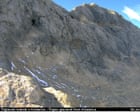
In the last five years, which includes Europe’s three hottest years on record, the remaining ice has melted to a handful of isolated pockets, with the final remnant of the main body measuring just a few metres by the end of summer. New photos of the mountainside – taken either side of snowfall this month – confirm that no ice remains.
The last piece of the Triglav glacier, pictured on 2 October. Photograph: Borut Živulovič/ReutersMatija Zorn, director of the Anton Melik Geographical Institute, said Mount Triglav “holds a central place in Slovenian national identity” and the demise of the glacier represents the loss of an important data source and indicator of climate change.
“Every year I knew that the ice was going to be less and less,” he said. “But I was shocked every year [by] how much less ice was up there.”
‘Planetary destruction on fast-forward’: witnessing the disappearance of Indonesia’s ‘eternity glaciers’Read moreFierce heatwaves made hotter by carbon pollution have ravaged the Alps and reduced big white glaciers to what scientists have called “moonlike” rock deserts. Last month, Swiss glaciologists found that nearly a fifth of the country’s ice had disappeared in the last five years, with a 5.5% drop in volume in 2026.
In Slovenia, home to the south-eastern tip of the Alps, the Triglav glacier suffered most of its decline in the last century. Historical photographs and documents suggest the glacier covered about 40 hectares in the mid-1800s. By 1946, when scientists conducted the first formal measurements, its area had shrunk to just 14 hectares.
Zorn, who first took measurements at the glacier in 2001, said the rate of change was surprising even in the decades in which the glacier defied expectations. The spot at which he had to put on crampons to prevent slipping jumped back year after year as the glacier receded.
Aerial map view of the Triglav glacier and surrounding mountains“The melting is incredible,” he said. “In 2002 … we took a core of ice out for some geochemical analysis and it was like 5 metres [deep]. The next year, I was standing on the same spot … not on ice, but on rock.”
skip past newsletter promotionFree newsletter |WeeklySign up to Down to Earth
The planet's most important stories. Get all the week's environment news - the good, the bad and the essential
after newsletter promotion
Triglav appears on Slovenia’s flag. Illustration: WikimediaTriglav is Slovenia’s highest peak, a cultural touchpoint that every person in the country of skiers and climbers is expected to climb at least once. Although the glacier has vanished, scientists have found ice in the caves beneath Triglav as its retreat has exposed new shafts. A second glacier on the Skuta mountain has also shrunk and thinned, but the remaining patch of ice is better shaded than Triglav and is expected to hold out for a few more years.
Glaciers in the French Alps are also melting fast as a result of climate change. Photograph: Jeff Pachoud/AFP/Getty ImagesMay heatwaves, deaths, ruined harvests: study of Europe’s summer paints grim picture for the futureRead moreWestern Europe suffered through its hottest summer on record this year, causing at least 50,000 estimated heat deaths and costly secondary effects that ranged from failed harvests to power plants being forced to shut down. Scientists are still assessing the damage done to ecosystems.
Miha Pavšek, a glaciologist and mountain guide, said “nature is changing in front of our eyes” but people were not yet taking it seriously.
“With the melting of the glacier, a part of me is also going away,” said Pavšek, who has a photograph of his parents there in 1957. “There are some things that humans thought were eternal. Glaciers are obviously not.”
Explore more on these topicsShareReuse this content‘Short on substance’: Albanese urges climate action on world stage – but advocates say Australia failing on fossil fuels
22 Sept 2026World must reject climate culture wars or face economic ruin, says UN’s Stiell
10 Sept 2026‘Realistic and reassuring’: UK public ‘responding calmly’ to Be Ready campaign
4d agoFrom grey water to cool spaces: 10 climate crisis policies Britain needs right now
12 Aug 2026Europe is the world’s fastest warming continent. What is to blame?
12 Aug 2026Romania blasts rock to divert water from drought-hit Danube to nuclear reactor
3 Aug 2026India’s monsoon rains in danger as UN chief warns planet is ‘on fire’
31 Jul 2026Ed Miliband indicates development and climate will be at heart of UK foreign policy
26 Jul 2026Climate crisis-driven heat ‘sucking soils dry’ as extreme drought hits Europe
23 Jul 2026Europe’s most effective tool to cut greenhouse gas emissions ‘risks being weakened’
17 Jul 2026
