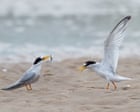
National Trust says latest figures encouraging – with numbers of birds on the rise – but work still to be done
Mark Brown North of England correspondentWed 30 Sep 2026 00.00 EDTLast modified on Wed 30 Sep 2026 00.01 EDTSharePrefer the Guardian on GoogleEngland’s most important tern colonies are showing signs of recovery after being hit by years of bird flu, flooding and increasingly unpredictable weather, new figures from the National Trust reveal.
The trust reported record numbers of little terns at Long Nanny in Northumberland, one of the UK’s most important breeding sites for what is the country’s second-rarest breeding seabird.
Numbers are also slightly up for arctic terns, the long distance superstars of the avian world that annually breed in places such as Northumberland before making the incredible journey south to Antarctica.
Sandwich terns on the Farne Islands. Photograph: Nick Upton/National Trust Images/PAIn Norfolk, more than 1,100 pairs of sandwich terns returned to breed at Blakeney Point after a two-year absence.
Ben McCarthy, the trust’s head of nature conservation, stressed there was no room for complacency.
But he said the figures showed “what can be achieved when internationally important breeding sites are carefully protected and managed.
“These results are particularly encouraging given the challenges seabirds have faced in recent years – from avian flu and extreme weather to wider pressures on the marine environment.”
The trust said there had been a “remarkable turnaround” for little terns at Long Nanny with at least 126 pairs nesting – doubling the previous site record.
At least 82 chicks are known to have fledged with the final total potentially exceeding 100 birds, rangers said.
Little terns are a particularly sensitive and vulnerable species that migrate from west Africa to breed, making nests, known as scrapes, on open sandy beaches.
The species had experienced “significant long-term declines nationally, making this year’s record breeding season especially significant”, the trust said.
An Arctic tern at Long Nanny, Northumberland. Photograph: Tim Robinson/National Trust Images/PAThe arctic tern colony at Long Nanny consisted of at least 730 breeding pairs this year with nests containing 1,346 eggs. That was slightly up and a sign of numbers “holding steady” after a torrid past few years for the species.
In 2023, Long Nanny’s arctic tern colony was devastated by avian flu, when rangers found more than 600 dead chicks. In recent seasons nests have been lost to high spring tides and extreme weather, the trust said.
James Porteus, the trust’s lead ranger for the Northumberland coast, said it was “incredibly encouraging” to see little terns doing so well, calling it an “exceptional season” after several years “dominated by bird flu outbreaks, flooded nests and concerns about declining numbers”.
Skylarks and sandwich terns among new birdies on reserve created from ‘boring old golf course’Read moreHe added: “To more than double the previous site record for breeding pairs is a remarkable achievement and a testament to the dedication of staff, volunteers and partner organisations who help protect the colony each year.
“It’s especially exciting to see so many chicks hatching and fledging. Little terns face huge challenges throughout their migration and breeding cycle, so every successful nesting attempt matters.”
Rangers in Northumberland also reported the return, for the seventh consecutive breeding season, of a black tern they have called Nigella. Black terns are not normally found breeding in the UK.
The trust stressed that the picture for breeding seabirds was “not universally positive”, pointing to a 27% fall in arctic tern numbers on the Farne Islands, Northumberland. Also there were no common terns there this year compared with five last year while sandwich tern numbers remained unchanged at two breeding pairs.
Explore more on these topicsShareReuse this contentOne in nine migratory birds threatened with extinction, global report says
11 Sept 2026Science Weekly‘A break from scrolling’: how Gen Z fell in love with birding – podcast
7 Jul 2026Birdsong data from Merlin ID app to help global biodiversity project
4 Jul 2026Listen to Britain’s dawn chorus of 1976: the dramatic loss of birdsong in 50 years
3 Jul 2026A little bird told her: scientist wins $100,000 prize for decoding birdsong
26 Jun 2026Migrating swifts loyally return every year to nests in buildings, study finds
26 Jun 2026First pelicans in 360 years hatch in St James’s Park London
19 Jun 2026Tropical heron spotted in UK for first time as more exotic birds arrive to thrill birdwatchers
13 Jun 2026Call to phase out ‘inhumane’ guga hunt by working with Hebridean islanders
8 Jun 2026Predator or prey? The confounding case of the missing sea eagle
6 Jun 2026