The spectacle of young migrants swimming en masse from Moroccan waters to the Spanish exclave of Ceuta exposed the frustration felt by a generation. One-third of the population of Morocco is aged between 15 and 30, and more than one third of that cohort is unemployed. A dearth of opportunity at home incentivises young men in particular to take huge risks to reach the European Union. More than 100 people died in that attempted exodus, most of them by drowning.
Worryingly, an adequate domestic response to a huge generational challenge is a long way off, if Morocco’s latest parliamentary election serves as any guide. In the wake of the Arab spring, democratising reforms were introduced to Morocco’s monarchical system. But a decade and a half after that supposedly transformative moment, last week’s poll laid bare an alarming collapse of trust in politics among the young.
Overall turnout among those who had registered to vote was a miserable 38% – the lowest for two decades. But among those under 35, the election was in effect ignored, with only 19% bothering to register. In total, less than one in four Moroccans of voting age cast a ballot, as a centre-right coalition led by the Authenticity and Modernity party held on to power. In what is essentially a hybrid democracy, where King Mohammed VI retains a dominant role, such numbers suggest grave problems may be being stored up for the future.
Fouzi Lekjaa. Photograph: Jalal Morchidi/EPAThe lack of youthful participation should not be mistaken for apathy and indifference. Exactly a year ago, a gen Z protest movement organised the largest demonstrations since 2011, focused on demands for investment in public goods such as health and education. The demonstrators also gave voice to widespread anger at the vast sums of government money being diverted to preparations for the 2030 Fifa World Cup, which Morocco will host alongside Spain and Portugal. One popular chant in the streets was “Healthcare first – we don’t want the World Cup”. Rattled authorities subsequently made thousands of arrests, amid allegations of brutal beatings. Hundreds remain in prison.
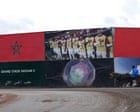
As the young have more or less opted out of mainstream politics, lip service is paid to the need to encourage their greater participation. But there is little chance that the king and his incoming administration will act on demands to shift resources from a World Cup primarily set to benefit big cities and an insider elite. The International Monetary Fund has calculated that expenditure on the tournament could amount to almost 12% of Morocco’s 2024 GDP, and preparations are set to dominate the country’s politics throughout the next parliament. The head of the Royal Moroccan Football Federation, Fouzi Lekjaa, is widely tipped to be the next prime minister, having joined the Authenticity and Modernity party a few weeks before the election.
In Ceuta, a humanitarian emergency continues to unfold as thousands languish in a tented camp in the port area of the territory. In four years’ time, Morocco will be the focus of global attention and the Grand Stade Hassan II, projected to be the world’s biggest football stadium with a capacity of 115,000, could conceivably be hosting the World Cup final. But among the country’s disillusioned young, the frustrated desire is for less circus, more bread and far better prospects.