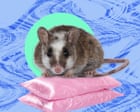
I’ve written a fair amount about my boarding school years in Nigeria in the 90s, but never about the rats that accompanied my school experience. Picture it: thousands of girls from across the country, each bearing a suitcase or two of a term’s worth of “provisions” – cornflakes, sugar cubes, powdered milk, hot chocolate powder, and so on. All it took was one or two careless girls giving the rats a taste of the exotic and they became among the most well-fed rats in the country, enjoying a steady stream of delicious teenage-girl snacks.
I will never forget the sight of rats – six or seven deep – congregating at dusk on the scraggly lawn next to my dormitory, like an illegal gathering of political dissidents. They were large (what with their rich diet), thick tails twitching, noses pushed together, damn near whispering. At first, they would scatter when humans approached. Then we had to clap and stomp to get them to shift. Like the proletariat, the rats began to understand their power, and stand their ground. They were no longer pests but now a sort of predator. If this sounds like the beginning of a highbrow horror, that’s how it felt.
Stories circulated – rats that seemed irritated and bemused when you shouted at them; rats that strolled rather than scurried. The most fantastical stories came from people who alleged they’d woken up to a rat nibbling on their toes, and that the rats were dastardly enough to blow cool air, between bites, to soothe their victims back to slumber. I have a specific memory of being actively chased by the two large rats I’d disturbed when I went to fetch a bucket of water one night. I remember telling that story, still breathless, to wide-eyed roommates. A friend in another house came back to her dorm one evening to find a mother rat and her newborn pups – pink and devoid of fur – under her pillow.
These rats were of course in their own habitat, perfectly at home, and adapting to our unwelcome presence. We were the interlopers, with our classrooms and dormitories, and daily assemblies and annual sports days. I can now recognise that dealing with a certain kind of pest is a fact of life in places where nature has not yet been completely decimated. The rats were the price of a kind of freedom. But years later, post-pandemic lockdown, when the rats attempted to colonise New York, I had searing flashes of the rats of my childhood. Yup, still traumatising.