If you get Global News from Instagram or Facebook - that will be changing. Find out how you can still connect with us.
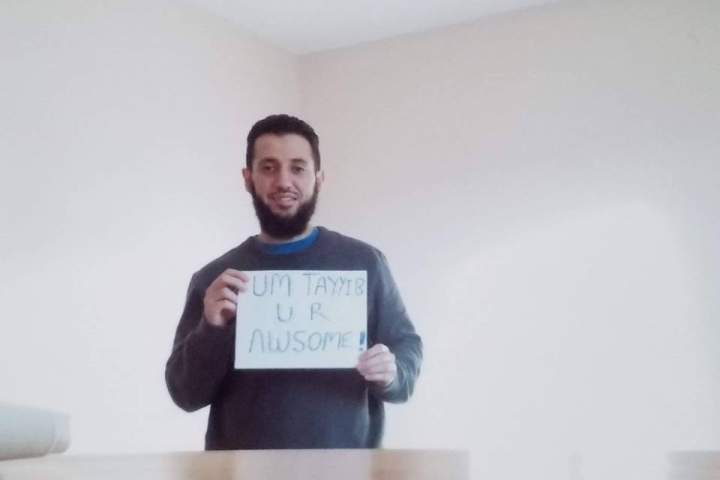
View image in full screen Photo of now-paroled Toronto 18 leader Zakaria Amara, from a Facebook page that has now been removed. FacebookOne of the ringleaders of the thwarted Toronto 18 terror plot has been granted full parole after the Parole Board of Canada found he no longer showed “any signs of holding onto extremist beliefs or radical ideologies.”
Zakaria Amara, who helped recruit members for a group that aimed to storm Parliament Hill and bomb several locations around Toronto, has been on day parole with multiple conditions for four years, and the board upgraded his release after reviewing his case last week.
In a written decision issued Friday, the two-member panel says Amara, 41, undertook a process to deradicalize while incarcerated and has used his day parole “for its intended rehabilitative purpose,” demonstrating “positive change, both in attitude and in behaviour.”
It says he was closely supervised while on day parole and his internet use, friendships and relationships were monitored, with no reported safety concerns or breaches.
The decision, which includes several redactions, says Amara now plans to live in his own home and continue to structure his time around his full-time job, attending a mosque, seeing his family and “appropriate leisure activities.”
Get daily National news
Get daily Canada news delivered to your inbox so you'll never miss the day's top stories. By providing your email address, you have read and agree to Global News' Terms and Conditions and Privacy Policy.He is barred from communicating with anyone involved in criminal activity, including any of the others arrested in the June 2006 anti-terrorist raids, or come into contact with anyone with extremist ideologies, except in his work as a consultant with a specialized program.
He must also continue to participate in counselling and be subject to financial monitoring as well as restrictions on his phone and internet use.
The board’s decision comes two decades after the dismantling of the homegrown plot that shocked the country and shifted public discourse around terrorism.
Amara and an accomplice recruited people for a group based on jihadist ideologies, planning to carry out terrorist acts to demand the withdrawal of Canadian troops from Afghanistan.
The group eventually splintered in two, with Amara taking the helm of a plot focused on building truck bombs targeting the Canadian Security Intelligence Services headquarters, the Toronto Stock Exchange building, and a military base.
- Criminality suspected in death of N.S. man injured in July electrocution, RCMP say
- Police scenes in west Edmonton, Parkland County after deadly college shooting
- FBI offers $150K reward for arrest of 75-year-old woman wanted in $30M scam
- Winnipeg police seek 2 people of interest in relation to suspected arson
He was arrested on the day bomb-making materials were delivered to a warehouse.
Amara pleaded guilty to participating in a terror group with the intention of causing an explosion or explosions that were likely to cause serious bodily harm or death, and was sentenced to life in prison with no chance of parole for 10 years. He challenged the sentence but it was upheld on appeal.
The parole board document said his “problematic and extremist ideologies and attitudes” remained during his first few years behind bars, which also included several incidents of misconduct.
His ideology “began to shift” in 2014 and he was eventually transferred to a medium-security institution in 2019, where correctional officers reported he was “respectful, polite and quiet,” the board said.
Amara was granted day parole for three months in 2022 and it was extended several times.
“During the latter part of your federal custody and for the past four years in the community, you have undertaken a process to distance yourself from extremist ideologies and others who share the same views,” the board wrote.
This report by The Canadian Press was first published Oct. 16, 2026.
Paola Loriggio, The Canadian Press
Add Global News as a Preferred Source on Google to see more of our stories in your search results.
Journalistic standards Report an error © 2026 The Canadian Press
