Aller au contenu principal
En direct Manifestation « contre le racisme anti-blancs » à Angers : en dépit de l’interdiction, les néofascistes déroulent leur haine
0 nouveau 1 angles 8,911 dossiers
Mardi 24 novembre 2026 0
Traduit par NobuAI Les articles non francophones sont affichés en français quand une traduction NobuAI est disponible. Traductions NobuAI disponibles.
Le trafic dans le détroit d'Ormuz chute fortement après les nouvelles frappes américano-iraniennes
Histoire · Lu d'abord chez BBC · 8 couvertures · Mis à jour il y a 4 mois

Le trafic dans le détroit d'Ormuz chute fortement après les nouvelles frappes américano-iraniennes

Traduit par NobuAI Article original en EN affiché en français.
Synthèse multi-sources ▾ cliquer pour masquer
  • Les données montrent une baisse du nombre de navires – dont beaucoup transportent du pétrole et du gaz – empruntant la voie navigable après les attaques de cette semaine. — BBC
  • After the US military confirmed that a service member had been killed in Iraq – the third in recent days – Donald Trump said the new attacks were ‘in honour’ of the deadMiddle East crisis live: follow latest updatesThe U... — The Guardian
  • Quelques heures après de nouvelles attaques américaines, l'Iran a déclaré avoir frappé des bases militaires américaines au Koweït, en Jordanie et à Bahreïn. — BBC
  • Brent crude climbs more than 4 percent as Washington and Tehran clash over control of critical waterway. — Al Jazeera English
  • The US has launched a new wave of strikes on Iran targeting Tehran's ability to threaten shipping in the strait. — Al Jazeera English

Première phrase de chaque source · résumé NobuAI à venir.

Comparaison de cadrage Comment chaque côté du spectre couvre la même histoire.
Côté gauche 3 sources
  • After the US military confirmed that a service member had been killed in Iraq – the third in recent days – Donald Trump said the new attacks were ‘in honour’ of the deadMiddle East crisis live: follow latest updatesThe U...

    — The Guardian
  • Brent crude climbs more than 4 percent as Washington and Tehran clash over control of critical waterway.

    — Al Jazeera English
  • The US has launched a new wave of strikes on Iran targeting Tehran's ability to threaten shipping in the strait.

    — Al Jazeera English
Côté centre 2 sources
  • Les données montrent une baisse du nombre de navires – dont beaucoup transportent du pétrole et du gaz – empruntant la voie navigable après les attaques de cette semaine.

    — BBC
  • Quelques heures après de nouvelles attaques américaines, l'Iran a déclaré avoir frappé des bases militaires américaines au Koweït, en Jordanie et à Bahreïn.

    — BBC
Côté droit 0 source

Aucune couverture identifiée de ce côté.

Synthèse extractive multi-sources · vérification éditoriale en bouclage · NobuAI complète l'analyse dès qu'assez de sources couvrent l'histoire.

Texte intégral

Lire l'article complet dans GrimbaNews

1096 mots
Big drop in oil, gas and cargo ships crossing Strait of Hormuz after new strikesByThomas Copeland and Libby Rogers, BBC Verify
  • Published1 hour ago

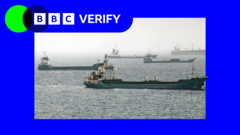
Traffic through the Strait of Hormuz has fallen steeply after a series of tit-for-tat strikes by the US and Iran following an attack on three tankers earlier this week.

Just 23 tankers and cargo ships crossed the critical Gulf waterway on Wednesday, according to the maritime intelligence firm Kpler, down from 47 from a week before.

The three ships that were struck this week were using a US-recommended route through Omani waters. Iran has repeatedly said the only "safe" route is separate route through its waters.

For decades vessels have been given free passage through the strait, through which more than a fifth of the world's oil and gas supplies as well as fertiliser shipments and other vital goods flow.

Before the conflict began an average of 138 ships crossed through the strait each day, according to the Joint Maritime Information Center (JMIC), a multinational maritime group including the US.

After the US and Israel launched its first strikes on Iran on 28 February, this fell to just a handful of ships per day,

Iran effectively closing the strait by attacking ships attempting to cross and laying mines and the US responded with a blockade on all shipping to and from Iranian ports.

A deal to end the war, which was signed on 17 June, included steps to re-open the strait. Washington also agreed to lift its naval blockade and ease sanctions on Iranian oil exports.

Following the agreement overall traffic levels in the strait did initially increase to a peak of 72 ships on 24 June.

What led up to this latest violence?

Throughout its negotiations with the US, Iran has insisted it has the right to control movement through the strait and introduce fees for ships to pass.

The US and its Gulf allies, as well as governments in Europe and Asia, oppose this and say passage through the strait must return to being free and open as it was before the conflict began.

After the deal to end the war, the Iranian government set out a system of lanes through the north of the waterway close to the Iranian coast, which it said all traffic must use.

"The only safe route for the passage of commercial ships and oil tankers in the strait is the route determined by the Islamic Republic of Iran," Iran's top military command, Khatam al-Anbiya Central Headquarters, reiterated after this week's ship strikes.

After the deal was signed, the JMIC recommended instead that ships take a different route through Omani waters in the south of the strait.

The number of ships using this Omani route grew to a peak of 28 vessels on 25 June, Kpler's data shows, overtaking the number of transits via the Iranian route.

Then on 25 and 27 June two ships in Omani waters were struck with Iran warning all vessels to only use its approved routes.

President Donald Trump accused Iran of a "foolish violation" of its truce and the US military conducted strikes on Iranian targets.

Iran in turn accused the US of violating their interim deal and said it had struck targets linked to American forces in the region.

The number of ships transiting via the Omani route initially slumped following the strikes, before continuing at a lower level than before.

What has happened to movement now?

The attacks on three ships this week has led to a slump in the number of vessels using the US-recommended Omani route.

All three ships - a Qatar-owned liquefied natural gas (LNG) tanker, a Saudi-owned crude oil tanker and a Liberia-flagged crude tanker - were crossing the strait close to the Omani route when they were attacked.

After the incidents the number of vessels using the Omani route through the strait has ground to a halt, according to Kpler.

No ships used it on Wednesday, falling from just three ships the day before. The number had averaged about 10 a day in the week before the latest attacks.

Martin Kelly, senior intelligence analyst at security firm EOS Risk Group, believes the current round of strikes will follow a familiar pattern to the last.

"There will now be a bit of back and forth between the US and Iran before they make friends again, shipping will peak and trough cautiously until Iran attacks another ship and the cycle starts again," he said.

What did the US-Iran peace deal say about the Strait of Hormuz?

The memorandum of understanding (MOU) signed between Iran and the US on 17 June committed Tehran to use "its best efforts for the safe passage of commercial vessels with no charge for 60 days".

It also said Iran would "conduct dialogue with the Sultanate of Oman to define the future administration and maritime services in the Strait of Hormuz".

Tehran said these parts of the deal give it control over the strait but critics noted there was no commitment from Iran to honour free passage on a long-term basis.

"The MOU was vague, particularly on issues surrounding the Strait of Hormuz," said Jennifer Parker, a maritime security expert at the University of New South Wales, "but even on a generous reading, it does not permit Iran to attack civilian shipping in Omani waters."

Concerns about sea mines laid by Iran in the internationally recognised shipping lanes used before the conflict have also played a part in holding traffic back from its pre-war levels.

On Thursday Iran's Revolutionary Guard Corps issued a statement through its affiliated news agency saying that "foreign powers have no claim to this land or to the Strait of Hormuz".

It went on to warn that "any interference in determining shipping routes" would "provoke a crushing response" and "seriously disrupt the gradual reopening process".

Strait reopening a 'challenge' for the US

Speaking at the Nato summit on Wednesday, US President Donald Trump said the memorandum of understanding was "over" but negotiations between Iran and the US could continue.

Iran has also accused Washington of violating the agreement after it revoked a US Treasury licence which had temporarily eased sanctions on Iranian oil exports.

"The US had clearly hoped that the generous, some would argue overly generous, financial incentives in the deal would discourage Iran from using shipping in the Strait of Hormuz as leverage. It will now need to rethink that approach," said Parker.

"Neither the promise of economic relief nor the threat of military punishment has, so far, changed Iran's behaviour.

"The challenge remains finding the right balance between the carrot and the stick," she said.

Additional reporting by Joshua Cheetham

Source originale : BBC ↗

Partager cette histoire

Envoyez le dossier, pas seulement un titre isolé.

Twitter Bluesky
Provenance des sources

Matrice des angles

Chaque source est reliée à son pays d’origine, son camp éditorial et l’extrait qui soutient le cadrage.

Voir le dossier
Sources 6
Camp dominant Gauche · 33%
Équilibre 100%
Origine dominante Amériques
Europe Royaume-Uni (GB)
2 sources Dominant: Gauche · 50%
Amériques États-Unis (US)
2 sources Dominant: Droite · 100%
International Qatar (QA)
1 source Dominant: Gauche · 100%
Amériques Canada (CA)
1 source Dominant: Centre · 100%
Gauche · 2 Centre · 2 Droite · 2
The Guardian Gauche

US launches ninth night of Iran strikes as strait of Hormuz standoff sees oil price pass $90 a barrel

After the US military confirmed that a service member had been killed in Iraq – the third in recent days – Donald Trump said the new attacks were ‘in honour’ of the deadM...

Europe · Royaume-Uni (GB) il y a 4 mois Ouvrir dans le dossier
Al Jazeera English Gauche

Oil prices jump as US and Iran trade attacks over Strait of Hormuz

Brent crude climbs more than 4 percent as Washington and Tehran clash over control of critical waterway.

International · Qatar (QA) il y a 4 mois Ouvrir dans le dossier
Al Jazeera English Gauche

US launches more strikes on Iran as Strait of Hormuz standoff deepens

The US has launched a new wave of strikes on Iran targeting Tehran's ability to threaten shipping in the strait.

International · Qatar (QA) il y a 4 mois Ouvrir dans le dossier
BBC Centre

Les États-Unis et l’Iran échangent des tirs alors que les tensions augmentent autour du détroit d’Ormuz

Quelques heures après de nouvelles attaques américaines, l'Iran a déclaré avoir frappé des bases militaires américaines au Koweït, en Jordanie et à Bahreïn.

Europe · Royaume-Uni (GB) il y a 4 mois Ouvrir dans le dossier
BBC Centre

Le trafic dans le détroit d'Ormuz chute fortement après les nouvelles frappes américano-iraniennes

Les données montrent une baisse du nombre de navires – dont beaucoup transportent du pétrole et du gaz – empruntant la voie navigable après les attaques de cette semaine.

Europe · Royaume-Uni (GB) il y a 4 mois Ouvrir dans le dossier
Global News Centre

U.S. halted Iran oil sales after ‘unacceptable’ Strait of Hormuz strikes

The United States revoked on Tuesday a general license that authorized the sale of Iranian oil after recent strikes reported in the Strait of Hormuz.

Amériques · Canada (CA) il y a 4 mois Ouvrir dans le dossier
The Washington Times Droite

Les États-Unis lancent de nouvelles frappes contre l'Iran alors que les deux pays ne sont pas d'accord sur le statut du détroit d'Ormuz.

L'armée américaine a lancé dimanche soir une nouvelle série de frappes contre l'Iran, alors que Washington cherche à entraver la capacité du régime islamiste à contrôler...

Amériques · États-Unis (US) il y a 4 mois Ouvrir dans le dossier
Breitbart News Droite

Quatre pétroliers et gaziers se retirent du détroit d'Ormuz après les attaques iraniennes

Au moins quatre pétroliers transportant du pétrole et du GNL ont abandonné leurs efforts pour traverser le détroit d'Ormuz après les attaques iraniennes. L'article Quatre...

Amériques · États-Unis (US) il y a 4 mois Ouvrir dans le dossier

8 articles

Lu chez The Guardian BBC Al Jazeera English The Washington Times Breitbart News Global News
Trier
Your experience on this site will be improved by allowing cookies.