Digital, culture, media and sport committee expected to hear evidence from BBC bosses and music industry experts
Jamie GriersonFri 18 Sep 2026 06.01 EDTLast modified on Fri 18 Sep 2026 06.41 EDTSharePrefer the Guardian on GoogleJoe and Jake. Daz Sampson. Electro Velvet. Who could forget them?
Most people, probably. They are some of the many acts who represented the UK at the Eurovision song contest in the last 20 years that have failed to find a place in the country’s cultural pantheon.
Now, the chair of an influential parliamentary committee has decided to interrogate exactly why the UK has been performing so poorly.
Dame Caroline Dinenage, who heads the digital, culture, media and sport committee, told the BBC: “We want to get to the bottom of who chooses our entrant, on what basis and whether our dismal record of achievement in recent years is the result of bad song choice, weak performance … or something else.”
Prior to 2000, the UK could be proud of its efforts: it finished in the top 10 every year except 1978, 1987 and 1999, and won with Love Shine a Light by Katrina and the Waves in 1997.
Katrina and the Waves after winning Eurovision in Dublin in May 1997. Photograph: John Giles/APBut since then it has reached the top 10 only three times and finished in last place six times – in 2003, 2008, 2010, 2019, 2021 and 2026 – with Jemini and James Newman scoring nul points in 2003 and 2021 respectively. The exception was Sam Ryder’s Space Man in 2022, which came second.
The act that represents the UK is selected by the BBC with support from a record label or music management company.
The Commons committee is reportedly expected to hear evidence from BBC bosses as well as music industry experts over the coming months.
In 2026, Bulgaria won the contest when Dara swept to victory with the song Bangaranga. The 27-year-old singer’s triumph was the first victory for Bulgaria, which joined Eurovision in 2005 and had sat out the past three editions.
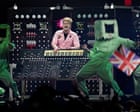
Dara in Vienna in May. Photograph: Lisa Leutner/ReutersThe UK finished last with Look Mum No Computer, AKA Sam Battle. The YouTuber, who makes his own synthesisers, failed to win over neutral voters with the song Eins, Zwei, Drei. The song received zero points in the public vote, meaning it did not make it into the top 10 in any of the voting countries.
The contest has become increasingly political, primarily over the inclusion of Israel, which has been participating since 1973. Ireland is to boycott the contest for the second year running over the Gaza war. It was one of five countries, along with Iceland, the Netherlands, Spain and Slovenia, that refused to take part in the competition this year in protest against Israel’s participation.
Explore more on these topicsShareReuse this contentIreland to boycott Eurovision again over Israeli participation and ongoing Gaza deaths
17h agoCanada to join Eurovision song contest from 2027
1 Jul 2026‘A quiet belief everything’s going to be all right’: Bulgarians celebrate Dara’s Eurovision win with Bangaranga
17 May 2026Woe Vienna? Boycotts and blackouts mar buildup as Eurovision 2026 begins
12 May 2026From Eurovision to the Venice Biennale, culture contests are being overshadowed by politics
6 May 2026Slovenia to air films about Palestine instead of Eurovision song contest
23 Apr 2026‘A place where music fills the air’: Bangkok to host Eurovision’s first Asia song contest
31 Mar 2026Romania’s Eurovision song criticised for ‘glamorising sexual strangulation’
13 Mar 2026The song that rhymes ‘pepperoni’ with ‘feeling okey-dokey’: the UK’s odd new Eurovision entry is here
6 Mar 2026