A Little Volatility Might Be Just What the Fed Needs
“When someone shows you who they are, believe them the first time,” the poet Maya Angelou is said to have famously observed.
Angelou might not have been thinking about monetary policy when she uttered those words. But they might matter when it comes to thinking about Kevin Warsh’s tenure at the Federal Reserve. A corollary of Angelou’s advice is that if you want to be believed, you need to show someone who you are.
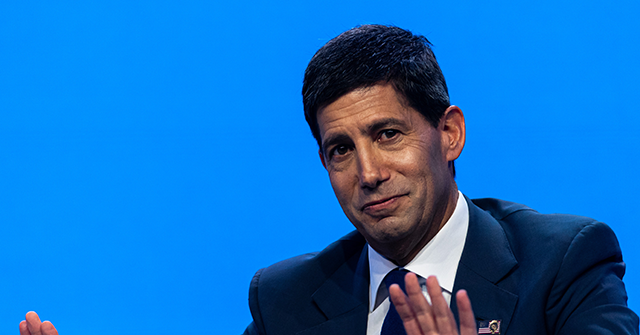
Warsh has said he wants to change the way the market and investors react to information about the economy and the words of Fed officials. In particular, he wants less focus on the words of Fed officials and more on the economy. That’s who he says he is. But he has not yet shown us who he is.
This matters because Wall Street has become awfully certain that the Federal Reserve won’t raise interest rates Wednesday. According to CME’s FedWatch, investors are putting the probability of a quarter-point hike at around 10 to 15 percent.
Those odds are clearly too low.
The economic case for another hike is straightforward. Inflation is still running well above the Fed’s target and has been gaining momentum. Oil and gasoline prices remain elevated, and there’s no resolution to the Iran war in sight. As a result, headline inflation is likely to remain stuck above the Fed’s target. What’s worse, there are signs that inflation is spreading beyond petroleum into a broader swath of the economy. So the Fed’s price stability job is a challenge.
Meanwhile, the other half of the Fed’s dual mandate is doing fine. Initial jobless claims are exceptionally low, and the unemployment rate, at 4.2 percent in September, indicates we’re at or near maximum employment. The AI investment boom continues to attract enormous amounts of capital, stocks remain near record highs, and S&P Global’s October purchasing managers’ surveys suggest the economy is booming, growing as fast as five percent.
Even Fed officials who favor holding rates steady at this week’s meeting generally expect another hike in December. But why wait until December? The next Fed meeting is just six weeks away. Between now and then, policymakers will get two monthly employment reports, but just one additional CPI report and one additional month of PCE inflation data beyond September. The November CPI won’t even be released until December 10, the day after the Fed makes its decision. If officials already believe another rate hike is necessary, what exactly are they waiting to learn?
There are also reasons for Fed Chair Kevin Warsh to favor raising rates that go beyond the immediate economic data. A hike would strengthen his inflation-fighting credibility. It would demonstrate his independence from President Trump, and establish that he is leading the Fed rather than following a committee troika of himself, New York Fed President John Williams, and Vice Chairman Philip Jefferson. It might even discipline some Fed officials who insist on making public predictions about the Fed’s next moves.
Some have argued that the Fed will not hike a week away from the midterm elections. But this hasn’t been true historically. The Fed did raise rates near the 1978, 1982, 2018, and 2022 midterms. What’s more, a second hike is less provocative than starting a hiking or cutting cycle just ahead of an election. Finally, there’s unlikely to be much political backlash. Who would object? President Trump is a low-rates guy; but since longer-term rates on mortgages and government debt might decline after a Fed hike (because of confidence that the Fed will bring down inflation faster), he might be persuaded to support the hike in the fed funds rate. And many conservative pundits have already signaled that a hike could be justified. Warsh has enough goodwill on the American right that few are going to see a hike as a politicized strike against Trump.
More importantly, it would demonstrate that Warsh means what he says about abandoning forward guidance. Every meeting is supposed to be live. Yet investors have convinced themselves that Wednesday’s outcome is practically settled.
A hike would cure that misconception rather quickly.
The Trouble with Tranquility
The biggest objection to raising rates Wednesday is that markets aren’t expecting it.
In Monday’s Wall Street Journal, Nick Timiraos quotes former Dallas Fed President Robert Kaplan arguing that officials haven’t adequately prepared investors for an increase. Kaplan also worries about the resulting market turbulence, saying, “there’s a cost to creating undue volatility.”
Former Fed Vice Chairman Alan Blinder makes a similar argument in Sunday’s Journal, recalling the “bad old days” when markets sometimes incorrectly anticipated Fed decisions, creating what he calls “excess volatility.”
The phrase “excess volatility” is question-begging and hubristic. Blinder is assuming that he knows the right amount of volatility, although he doesn’t explain how he knows that. It just strikes him as obvious that less volatility is preferable to more.
But the bigger problem right now is likely deficient volatility. After decades of policies aimed at suppressing financial volatility, especially in the bond market, the risk is that we’ve trained investors to be too complacent.
This is sometimes called the “volatility paradox.” Prolonged periods of tranquility can encourage investors to increase leverage, reduce hedging, and adopt trading strategies that become dangerously vulnerable when volatility eventually returns.
The idea isn’t new. Economist Hyman Minsky famously argued that stability itself can be destabilizing. When financial markets remain tranquil for long periods, investors and businesses become increasingly confident that the good times will continue. Businesses take on more debt, accept greater risks, and construct financial arrangements that depend on continued stability. You’ve seen this film before. Eventually, the financial system becomes dangerously fragile precisely because everyone has grown so comfortable with its apparent safety. (Princeton economists Markus Brunnermeier and Yuliy Sannikov developed a formal model of the “volatility paradox” in a 2014 paper.)
In other words, the apparent safety of quiet markets can make the financial system more dangerous. Sometimes a little volatility now might save us from a lot more volatility later.
Warsh has understood this for a long time. In a 2008 speech, he declared, “Volatility is generally a friend, not a foe, of market functioning.”
He went on to argue that volatility should be allowed to reshape financial markets, provided the movements weren’t destabilizing.
This doesn’t strike us as the outlook of a guy who is going to flinch from hiking because it might roil markets.
Who’s the Boss?
Warsh has repeatedly explained that he wants investors to evaluate economic fundamentals rather than spend their time decoding the Fed’s intentions. He also wants market prices to provide independent information to policymakers.
Yet the market’s overwhelming confidence in an October pause appears to rest heavily on what officials have said about future policy. Timiraos acknowledges that expectations have been shaped as much by Fed communications as by the economy itself.
Now those expectations are being offered as a reason the Fed shouldn’t hike.
You almost have to admire that chutzpah. Wall Street has turned its own forecast into an argument that the Federal Reserve must follow it.
We’re not saying that it’s a lock that the Fed raises rates this week. But if the economic fundamentals warrant higher rates, the possibility of unsettling investors probably will not be a major obstacle for Warsh. A little volatility might be exactly what markets need to remember that the Fed isn’t in the business of guaranteeing its forecasts.
Warsh has told investors who he is. Perhaps he’s about to show them.