Aller au contenu principal
En direct Manifestation « contre le racisme anti-blancs » à Angers : en dépit de l’interdiction, les néofascistes déroulent leur haine
0 nouveau 1 angles 8,911 dossiers
Lundi 23 novembre 2026 0
Traduit par NobuAI Les articles non francophones sont affichés en français quand une traduction NobuAI est disponible. Traductions NobuAI disponibles.
Breitbart Business Digest : Et si nous construisions trop de maisons ?
Histoire · Lu d'abord chez Breitbart News · 12 couvertures · Mis à jour il y a 2 jours

Breitbart Business Digest : Et si nous construisions trop de maisons ?

Traduit par NobuAI Article original en EN affiché en français.
Couverture déséquilibrée — cette histoire n'est pour l'instant couverte que par la droite. Voir cet angle mort.
Synthèse multi-sources ▾ cliquer pour masquer
  • Avant de démolir les lois de zonage pour accueillir des millions de logements prétendument disparus, nous devrions peut-être nous demander si ces logements seront réellement nécessaires. — Breitbart News
  • It somehow seems fitting that the Anthropic initial public offering occurred amid a mysterious series of malfunctions of critical digital systems. — Breitbart News
  • La renaissance du secteur manufacturier américain a de nouveau été clairement mise en évidence dans le rapport sur les biens durables publié mardi par le Bureau du recensement. — Breitbart News
  • The biggest objection to the Fed raising rates on Wednesday is that markets aren't expecting it. — Breitbart News
  • Cette semaine, les rendements obligataires ont chuté, déclenchant des avertissements marmonnés sur une calamité imminente de la part des mêmes personnes qui nous avaient mis en garde contre la calamité de la hausse des t... — Breitbart News

Première phrase de chaque source · résumé NobuAI à venir.

Texte intégral

Lire l'article complet dans GrimbaNews

914 mots
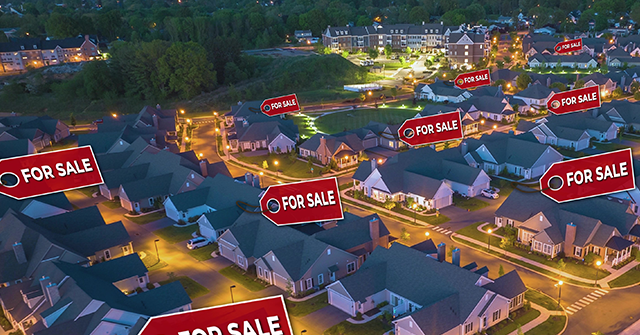
Breitbart Business Digest: What if We’re Building Too Many Houses? iStock/Getty Images

The Myth of the Housing Shortage

There are few ideas in American economic policy that enjoy more universal acceptance than the notion that the United States is suffering from a severe housing shortage. From the Brookings Institution to the Urban Institute, from Freddie Mac to Harvard’s Joint Center for Housing Studies, the experts are practically unanimous: America has failed to build enough homes.

The estimates vary, but the conclusion rarely does. Freddie Mac says we’re short 3.7 million homes. Brookings puts the deficit at 4.9 million. The National Association of Realtors has estimated a shortfall of 5.5 million.

The evidence can seem so straightforward as to be almost undeniable. We’ve seen soaring home prices and ever-escalating rents. Homebuilding has lagged behind historical averages and has been dropping recently. Politicians get elected promising to freeze rents or expand the housing supply. It’s one of the top complaints of many younger American workers: they cannot afford a home.

Many economists and politicians blame increasingly restrictive zoning laws that prevent developers from responding to higher prices by building more houses. They are actively scheming to cajole or bribe towns and cities all over America to upend zoning restrictions, especially restrictions on density.

This strength of this expert-class consensus and the plan to overturn existing local laws should raise red flags for any conservative. And, as it turns out, the housing shortage thesis is extremely myopic. The advocates of using government to increase the housing supply are generals fighting the last war.

The Coming Collapse in Housing Demand

The conventional housing-shortage narrative rests heavily on the experience of the past two decades. Yet the demographic outlook for the next two decades looks radically different.

The Census Bureau’s baseline projection anticipates that America’s population will peak at around 370 million in 2080 before gradually declining. But that projection assumes immigration will continue at relatively high levels.

Under the Census Bureau’s low-immigration scenario, the population peaks much sooner—at approximately 346 million in 2043 — and begins declining thereafter, falling to 319 million by 2100.

That scenario looks increasingly plausible given the popularity of immigration restrictions.

Indeed, the Congressional Budget Office’s latest demographic forecast, incorporating lower immigration and fertility assumptions, projects that population growth will reach zero by 2056, with annual deaths exceeding births beginning in 2030. That’s just thirty years from now.

More importantly, household formation—the actual source of demand for housing—is headed for a historic slowdown.

Harvard’s Joint Center for Housing Studies projects that America will add 8.6 million households between 2025 and 2035, followed by just 5.1 million between 2035 and 2045. That would be the slowest decade of household growth in at least a century.

But those are the baseline projections. Under Harvard’s low-immigration scenario, the country adds just 6.9 million households over the coming decade and only 3.2 million during the following decade.

That’s a mere 320,000 additional households annually by 2035–2045.

Meanwhile, the aging baby-boom generation will increasingly release existing homes onto the market as older Americans die or consolidate households. Harvard consequently projects that underlying demand for new housing construction will fall to approximately 1.1 million units annually over the next decade and just 800,000 during 2035–2045.
Under the low-immigration scenario, that falls to just 610,000 units annually.

Now consider the supposedly anemic pace of American homebuilding.

According to the Census Bureau, housing completions were running at a seasonally adjusted annual rate of 1.192 million in September.

In other words, construction is already running above Harvard’s baseline projection of underlying demand for the coming decade—and nearly twice its low-immigration projection for the following decade. If construction continued at today’s pace, the cumulative excess over projected underlying demand could theoretically eliminate Freddie Mac’s entire estimated shortage within a decade.

The War on Zoning

Yet housing advocates want sweeping changes to America’s communities, particularly the elimination of zoning restrictions that limit residential density. Their argument is that density restrictions artificially constrain supply, driving up prices.

But this overlooks why those restrictions exist. Americans pay substantial premiums to live in low-density neighborhoods with large lots, quiet streets, privacy, and predictable surroundings. Zoning helps preserve these valuable amenities.

Indeed, economic research finds that households have measurable preferences for lower residential density. Zoning also provides something particularly important when purchasing an expensive, long-lived asset: protection against uncertainty.

A family purchasing a home in a neighborhood with density restrictions pays for the reasonable expectation that the character of that neighborhood will remain relatively stable. Those protections are capitalized into property values. Eliminating them can destroy something homeowners have already paid for.

Housing economists often treat the premium associated with restrictive zoning as evidence of an economic distortion. But part of that premium represents genuine value that buyers willingly purchase.

In many ways, zoning restrictions are a rare example of localism and populism triumphing over special interests. The real estate agents, the home builders, and the mortgage lenders would love to see housing supply freed from restrictive zoning. The folks who don’t want it are the people who buy and own homes.

There is something deeply short-sighted about proposing potentially irreversible changes to established communities in response to a housing shortage that demographic trends suggest may already be fading.

Before we tear up zoning laws to accommodate millions of supposedly missing homes, perhaps we should ask whether those homes will actually be needed.

The greatest housing mistake of the next generation may turn out to be building too much, not too little.

Source originale : Breitbart News ↗

Partager cette histoire

Envoyez le dossier, pas seulement un titre isolé.

Twitter Bluesky
Provenance des sources

Matrice des angles

Chaque source est reliée à son pays d’origine, son camp éditorial et l’extrait qui soutient le cadrage.

Voir le dossier
Sources 1
Camp dominant Droite · 100%
Équilibre 0%
Origine dominante Amériques
Amériques États-Unis (US)
1 source Dominant: Droite · 100%
Droite · 1
Breitbart News Droite

Breitbart Business Digest: The AI Sky Is Falling

It somehow seems fitting that the Anthropic initial public offering occurred amid a mysterious series of malfunctions of critical digital systems. The post Breitbart Busi...

Amériques · États-Unis (US) il y a 2 jours Ouvrir dans le dossier
Breitbart News Droite

Breitbart Business Digest : Et si nous construisions trop de maisons ?

Avant de démolir les lois de zonage pour accueillir des millions de logements prétendument disparus, nous devrions peut-être nous demander si ces logements seront réellem...

Amériques · États-Unis (US) il y a 3 semaines Ouvrir dans le dossier
Breitbart News Droite

Breitbart Business Digest : La guerre surréaliste contre le boom manufacturier américain

La renaissance du secteur manufacturier américain a de nouveau été clairement mise en évidence dans le rapport sur les biens durables publié mardi par le Bureau du recens...

Amériques · États-Unis (US) il y a 3 semaines Ouvrir dans le dossier
Breitbart News Droite

Breitbart Business Digest: Volatility Won't Stand in Warsh's Way

The biggest objection to the Fed raising rates on Wednesday is that markets aren't expecting it. But a little volatility might be exactly what markets need to remember th...

Amériques · États-Unis (US) il y a 3 semaines Ouvrir dans le dossier
Breitbart News Droite

Breitbart Business Digest : La reddition des Bond Vigilantes

Cette semaine, les rendements obligataires ont chuté, déclenchant des avertissements marmonnés sur une calamité imminente de la part des mêmes personnes qui nous avaient...

Amériques · États-Unis (US) il y a 4 semaines Ouvrir dans le dossier
Breitbart News Droite

Breitbart Business Digest: Inflation Takes Flight, and AI Debt Hits Turbulence

The Weekly Wrap: Wall Street’s Adventures in Wishful Listening Welcome back to Friday! This is another edition of the Breitbart Business Digest weekly wrap. It was inflat...

Amériques · États-Unis (US) il y a 1 mois Ouvrir dans le dossier
Breitbart News Droite

Breitbart Business Digest : l’inflation se propage

Les rapports sur l’inflation de septembre ont été trempés dans l’essence. Malheureusement, certains signes indiquent que l’inflation s’intensifie en dehors du complexe én...

Amériques · États-Unis (US) il y a 1 mois Ouvrir dans le dossier
Breitbart News Droite

Breitbart Business Digest: Trump vs. Powell, Revisited

The financial press is bizarrely treating the inspector general’s report on the Fed’s headquarters renovation project as a vindication of Jerome Powell. But was it? The p...

Amériques · États-Unis (US) il y a 1 mois Ouvrir dans le dossier
Breitbart News Droite

Breitbart Business Digest: The AI Economic Apocalypse Won't Happen

One of the stranger predictions about artificial intelligence is that it will make the economy spectacularly productive while leaving most people unemployed, unemployable...

Amériques · États-Unis (US) il y a 1 mois Ouvrir dans le dossier
Breitbart News Droite

Breitbart Business Digest: The Gloom and Boom Economy

The gap between household economic sentiment and economic fundamentals has become a chasm. The post Breitbart Business Digest: The Gloom and Boom Economy appeared first o...

Amériques · États-Unis (US) il y a 1 mois Ouvrir dans le dossier
Breitbart News Droite

Breitbart Business Digest: The Blue-Collar Boom Inside Anthropic’s AI Model

What if the future of AI's impact on the economy is not a jobs apocalypse but a blue-collar renaissance? The post Breitbart Business Digest: The Blue-Collar Boom Inside A...

Amériques · États-Unis (US) il y a 2 mois Ouvrir dans le dossier

12 articles

Trier
Your experience on this site will be improved by allowing cookies.