Interim truce looks increasingly precarious as Iran carried out retaliatory strikes on US bases in Bahrain, Kuwait and Qatar
LIVE Updated 17s agoTaz Ali (now). and Jonathan Yerushalmy (earlier)Thu 9 Jul 2026 03.43 EDTFirst published on Thu 9 Jul 2026 03.02 EDTShareKey events- nowIranian army claims attacks on Bahrain, Kuwait and Qatar
- 29m ago14 people killed in Iran in recent wave of US attacks, Tehran health ministry says
- 40m agoWelcome and summary
Welcome and summary
Hello and welcome to the Guardian’s coverage of the continuing crisis in the Middle East.
Iran was pummelled with a volley of missiles for a second consecutive night, with the US military claiming to have struck 170 Iranian targets in the last 48 hours.
US Central Command (Centcom) said the intense bombing aimed to “further degrade Iran’s ability to attack commercial shipping and innocent civilian mariners in the strait of Hormuz”.
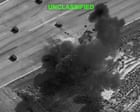
Smoke rises from explosions at an unknown location, following what US Central Command said were strikes on Iranian military targets. Photograph: US Central Command/ReutersIranian state media reported explosions in several cities, most of them concentrated in the south of the country, as its army responded with retaliatory strikes on US bases in Bahrain, Kuwait and Qatar.
The regional crossfire sparked by a battle to control movement in the narrow and strategic shipping channel threatens to unravel an interim truce between the US and Iran.
Both sides have vowed to escalate retaliations should provocations continue, with president Donald Trump warning that worse could come, while Iran has threatened to expand its attacks against US bases in the region.
During the Nato summit in Turkey, Trump said he considers the memorandum of understanding with Iran to be “over”, adding: “I don’t want to deal with them.”
Iran’s top negotiator, Mohammad Baqer Qalibaf, vowed that the strait of Hormuz would remain under Iranian management. “The strait of Hormuz will be reopened only under Iranian arrangements, not through US threats,” he wrote on X.
The fresh strikes came as Iranians prepare to bury their late supreme leader Ali Khamenei in his home town of Mashhad in north-east Iran. The burial follows a multi-day funeral ceremony that attracted millions of mourners across various cities in both Iran and Iraq.
Read the full report here:
US launches strikes on Iran for a second day after Trump says agreement to end the war is ‘over’Read moreShareUpdated at 03.16 EDTKey events- nowIranian army claims attacks on Bahrain, Kuwait and Qatar
- 29m ago14 people killed in Iran in recent wave of US attacks, Tehran health ministry says
- 40m agoWelcome and summary
Iranian army claims attacks on Bahrain, Kuwait and Qatar
Bahrain, Qatar and Kuwait have come under renewed attack this morning as Iran continues its retaliatory strikes on US bases in the region.
Bahrain – home to the US Navy’s 5th Fleet – Kuwait and Qatar all sounded sirens as air defence systems shot down incoming Iranian drones and missiles.
In a statement carried by Iran’s official Irna news agency, the Iranian army said it targeted a US Patriot missile system in Kuwait as well as an early warning satellite antenna site in Qatar and fuel tanks belonging to the US military in Bahrain.
Share29m ago03.14 EDT14 people killed in Iran in recent wave of US attacks, Tehran health ministry says
The recent wave of US strikes in Iran have killed 14 people and injured 78 others, the Iranian health ministry said.
In a post on X, Hossein Kermanpour, head of public relations for Iran’s ministry of health, said: “While a ceasefire was in place, the US attacked five Iranian provinces on 7 and 8 July, resulting in 14 martyrs and 78 injuries.
“Of the injured, 47 remain hospitalised, while the others have been discharged after receiving medical treatment.”
ShareUpdated at 03.14 EDT40m ago03.02 EDTWelcome and summary
Hello and welcome to the Guardian’s coverage of the continuing crisis in the Middle East.
Iran was pummelled with a volley of missiles for a second consecutive night, with the US military claiming to have struck 170 Iranian targets in the last 48 hours.
US Central Command (Centcom) said the intense bombing aimed to “further degrade Iran’s ability to attack commercial shipping and innocent civilian mariners in the strait of Hormuz”.
Smoke rises from explosions at an unknown location, following what US Central Command said were strikes on Iranian military targets. Photograph: US Central Command/ReutersIranian state media reported explosions in several cities, most of them concentrated in the south of the country, as its army responded with retaliatory strikes on US bases in Bahrain, Kuwait and Qatar.
The regional crossfire sparked by a battle to control movement in the narrow and strategic shipping channel threatens to unravel an interim truce between the US and Iran.
Both sides have vowed to escalate retaliations should provocations continue, with president Donald Trump warning that worse could come, while Iran has threatened to expand its attacks against US bases in the region.
During the Nato summit in Turkey, Trump said he considers the memorandum of understanding with Iran to be “over”, adding: “I don’t want to deal with them.”
Iran’s top negotiator, Mohammad Baqer Qalibaf, vowed that the strait of Hormuz would remain under Iranian management. “The strait of Hormuz will be reopened only under Iranian arrangements, not through US threats,” he wrote on X.
The fresh strikes came as Iranians prepare to bury their late supreme leader Ali Khamenei in his home town of Mashhad in north-east Iran. The burial follows a multi-day funeral ceremony that attracted millions of mourners across various cities in both Iran and Iraq.
Read the full report here:
US launches strikes on Iran for a second day after Trump says agreement to end the war is ‘over’Read moreShareUpdated at 03.16 EDTExplore more on these topics- US-Israel war on Iran
- Middle East crisis live
- Iran
- Trump administration
- Strait of Hormuz
- Middle East and north Africa
- US foreign policy